A133 Touch Terminal Product Development | Obeita
This configuration is proposed for assessment. Confirm interfaces, components and performance for your specific project.
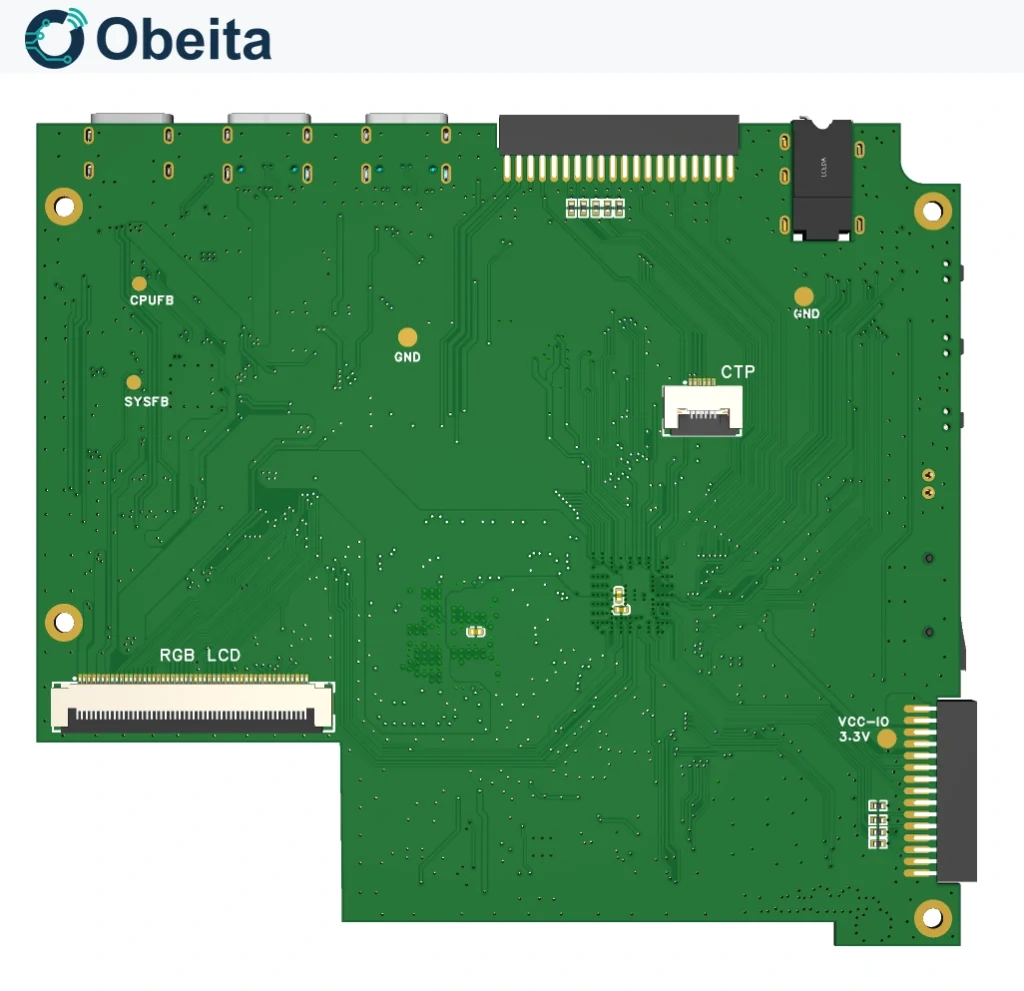
Develop a 7-inch touch terminal around the Allwinner A133 with a 1024 × 600 display, 2 GB LPDDR3 and a modular enclosure. This direction combines Android application use with board-level access for DDR, power and peripheral diagnosis.
Memory and boot media are separate milestones
The board uses a four-layer design and a 32 GB eMMC footprint/configuration, but the described boot workflow uses a TF card. DDR stress testing precedes operating-system installation: the development notes use DragonHD with an 888 MHz LPDDR3 test setting. A production eMMC image needs its own bootloader, partitioning, flashing and recovery procedure rather than inheriting the TF-card result.
Power and audio diagnosis
A debug UART at 115200 baud helps distinguish bootloader, kernel and PMU communication problems. One documented bring-up issue involved the PL I/O voltage domain used for A133-to-AXP707 communication. Audio integration also needs the headphone-detect signal and speaker-amplifier shutdown GPIO to agree with the driver, otherwise sound can continue through the speaker after headphones are inserted.
A three-part enclosure
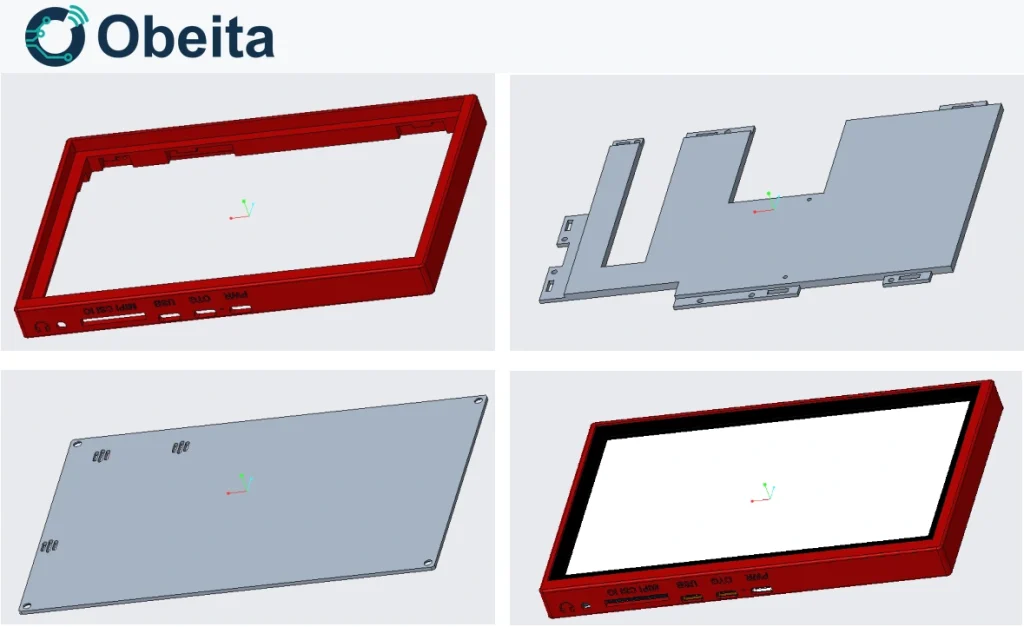
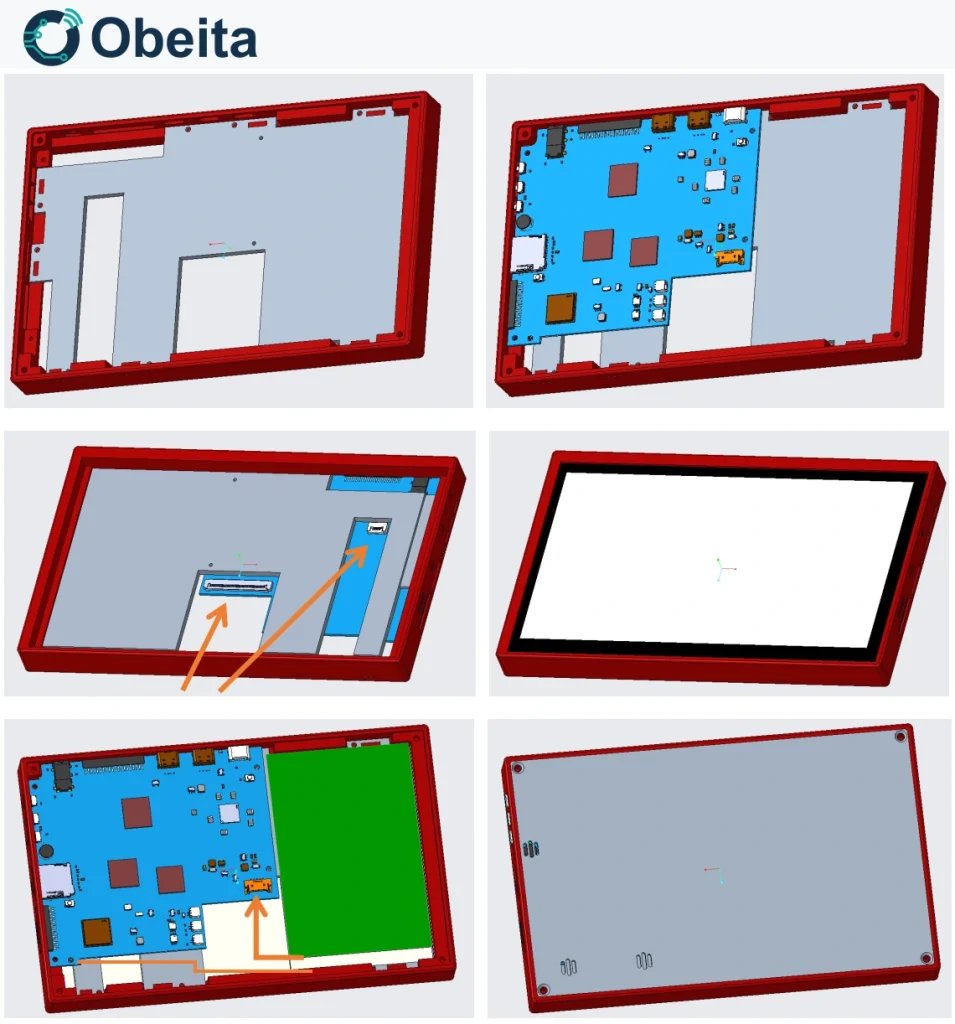
The enclosure separates an outer frame, middle carrier and rear cover. The middle layer locates the PCB and display; a metal rear cover can be evaluated for thermal contact while printed plastic is an alternative for early prototypes. Install and test the PCB before permanently fixing the display. Cable clearance, battery retention and antenna placement need to be reviewed before closing the rear cover.
From tablet hardware to an equipment HMI
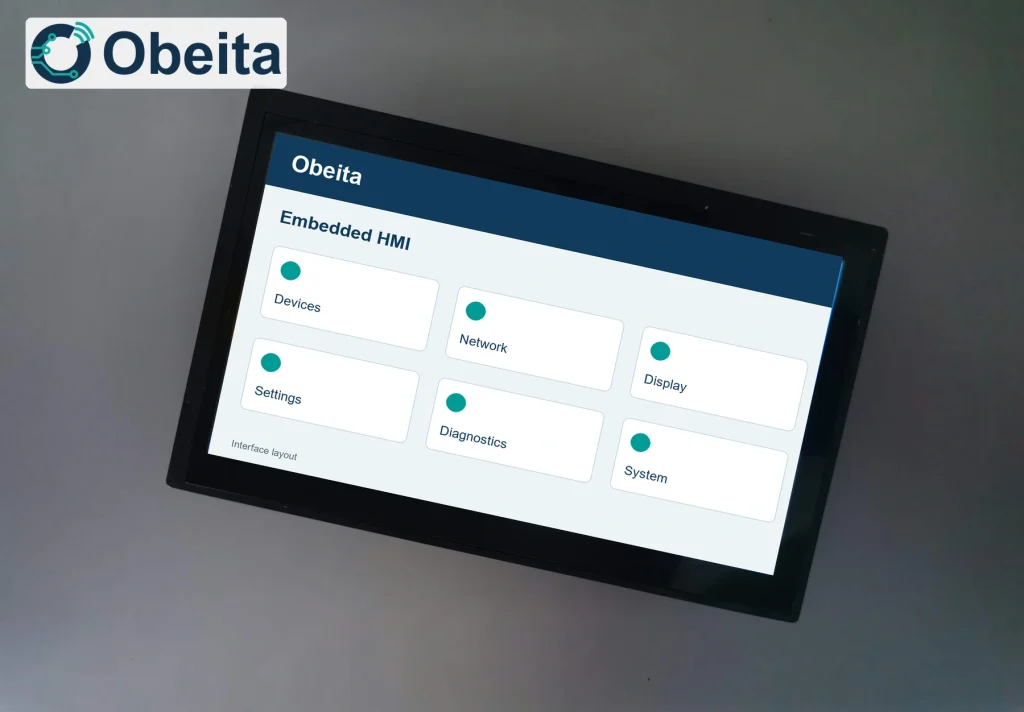
Android 10 is the documented software direction, with USB host/OTG, a 3.5 mm audio connection and Type-C charging. The device can be adapted for a local equipment application, service terminal or status display. Wi-Fi antenna matching, temperature, charge operation and repeated cold boots are productisation tasks. The branded screen illustration shows a proposed interface, not a running application.
Proposed design configuration
These are configuration inputs for development; the final assembly, firmware and acceptance tests define the delivered specification.
| Item | Configuration |
|---|---|
| CPU | Allwinner A133, quad Cortex-A53 |
| Display | 7-inch, 1024 × 600 |
| Memory / storage | 2 GB LPDDR3; 32 GB eMMC configuration; TF boot path |
| Mechanical envelope | 173 × 109 × 15 mm design |
| Battery direction | 3.7 V, 3000 mAh design input |
| Service interfaces | USB 2.0, USB OTG, debug UART; 3.5 mm audio |
Project questions
Can the tablet be shipped from the TF-card demonstration alone?
A production boot image, reliable storage, thermal behaviour and recovery process still need validation. The eMMC path is a separate acceptance item.
Why does the speaker remain active after headphones are inserted?
Check the detect input, audio routing and amplifier shutdown GPIO together. A correct jack-detect level does not guarantee that the software mutes the amplifier.
Plan this project
Send the display application, boot-media preference, battery requirement and enclosure constraints to define the terminal revision.