Yocto Image Package Lists: Explain Why a Recommended Package Appears
Trace why Yocto installs a recommended package and choose between selective recommendation filters, blanket filtering and a hard package exclusion.
Board-level Linux integration, U-Boot, device trees, kernel drivers and peripheral bring-up. Separate power and hardware checks from software adaptation, and define a recoverable boot path.
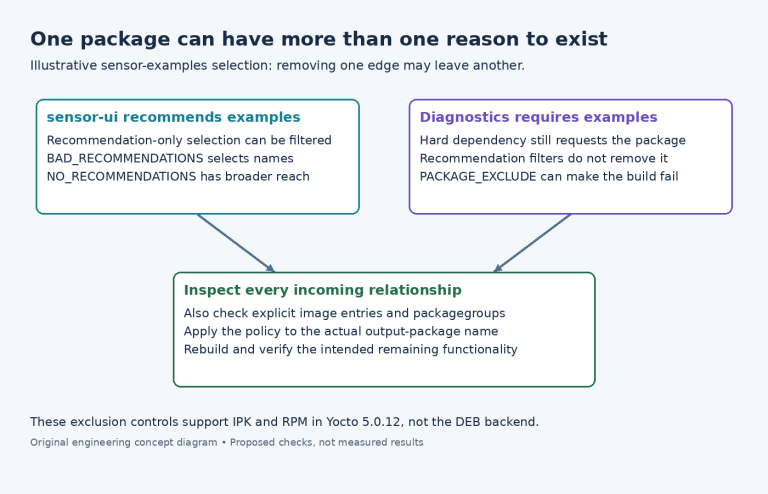
Trace why Yocto installs a recommended package and choose between selective recommendation filters, blanket filtering and a hard package exclusion.
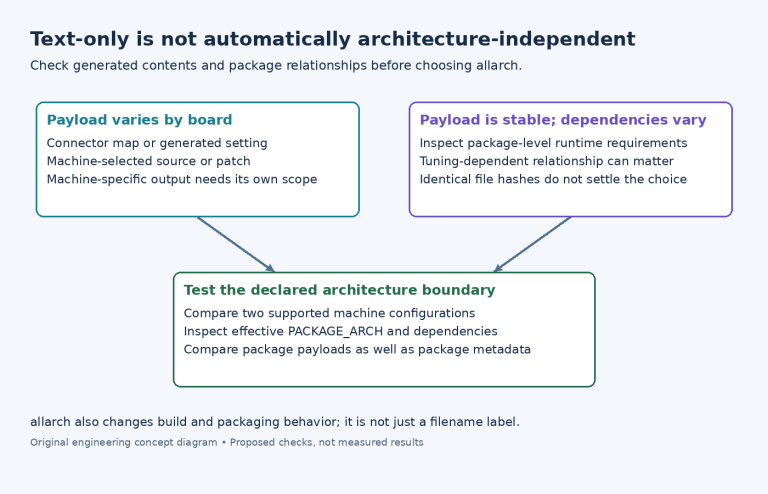
Classify Yocto packages using payload and dependency invariants, and diagnose why text-only recipes can still be inappropriate for allarch.
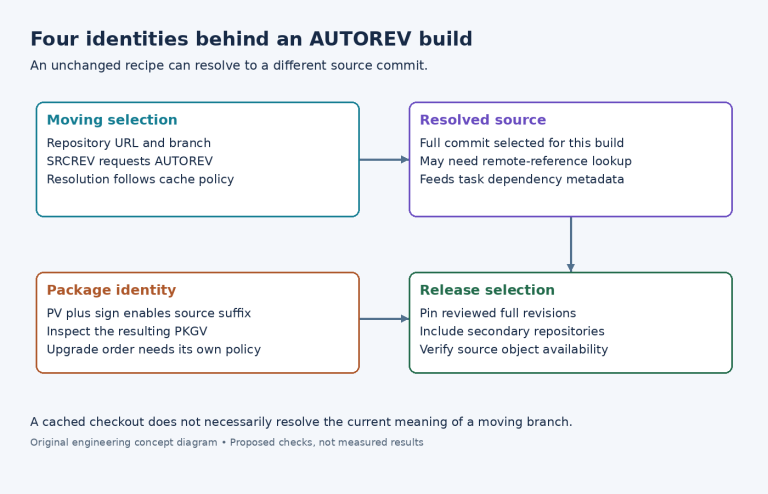
Explain Yocto AUTOREV resolution, revision-cache behavior, pre-task source lookup, and the separate package-version identity needed before freezing a release revision.
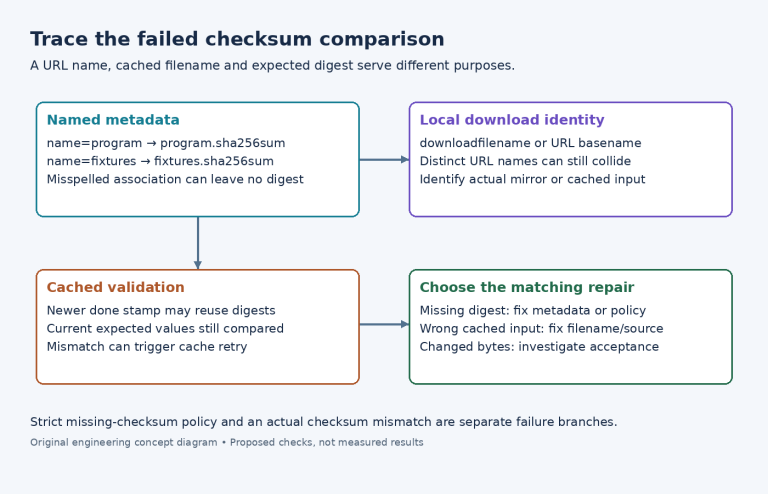
Diagnose Yocto archive checksum failures through named URI flags, download filename collisions, actual mirror selection, done-stamp digest reuse and strict missing-checksum policy.
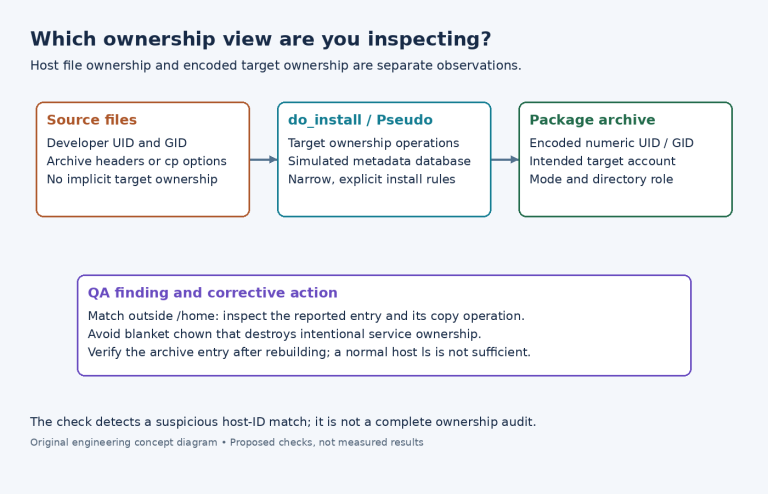
Diagnose Yocto host-user-contaminated findings by tracing ownership-preserving copies, respecting Pseudo’s simulated view, and inspecting numeric package ownership.
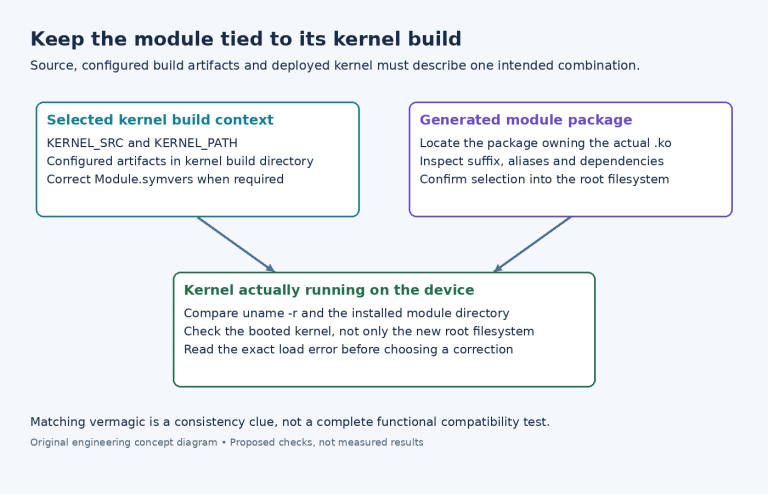
Trace an out-of-tree Yocto module from selected kernel source and build artifacts through symbol versions, split packages and the kernel actually booted.
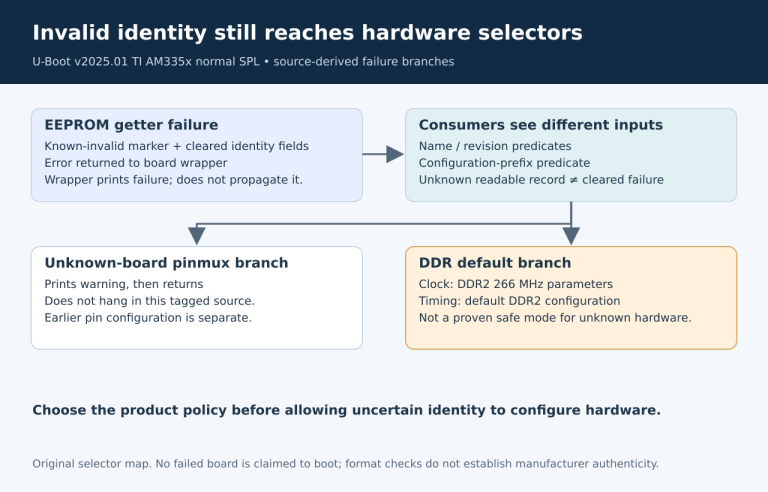
Trace AM335x EEPROM failure state into warning-only pinmux handling and concrete DDR defaults, distinguishing unreadable and unsupported identities.
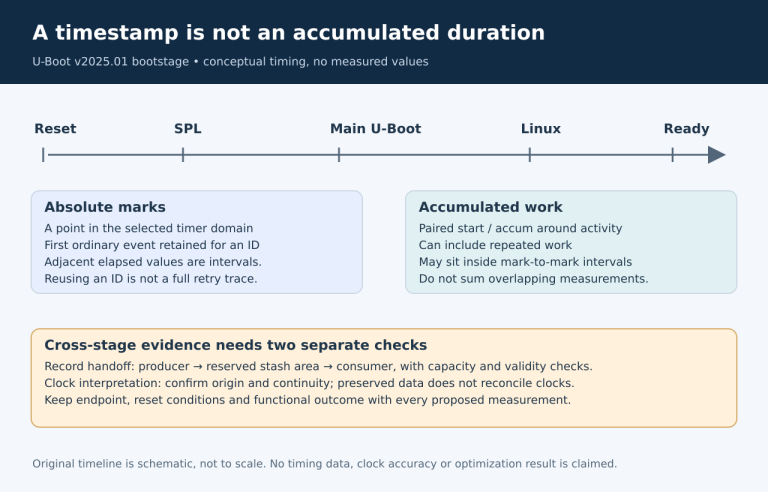
Interpret timestamp marks and repeated-work accumulators correctly, then verify record completeness and cross-stage handoff before optimizing boot time.
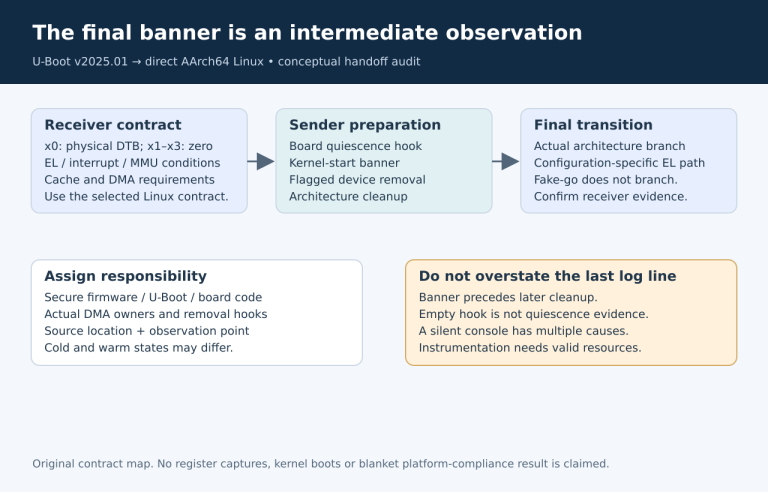
Audit the direct ARM64 Linux entry contract, final architecture branch and board/device cleanup beyond the starting-kernel banner.
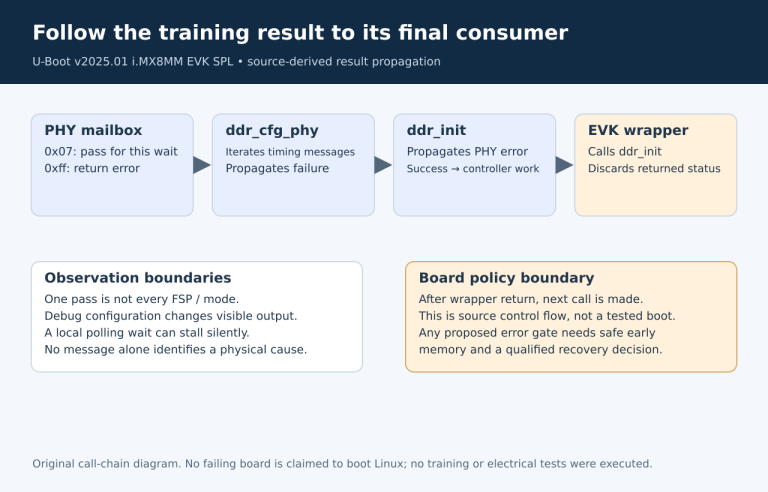
Follow i.MX8MM EVK training results through multiple passes, controller initialization and the board wrapper that ignores the return.