U-Boot PCI BAR Mapping: The Helper Checks Host Windows, Not the BAR’s Own Size
A PCI register mapping returns a pointer, yet the requested register displacement is outside the endpoint’s BAR.
Board-level Linux integration, U-Boot, device trees, kernel drivers and peripheral bring-up. Separate power and hardware checks from software adaptation, and define a recoverable boot path.
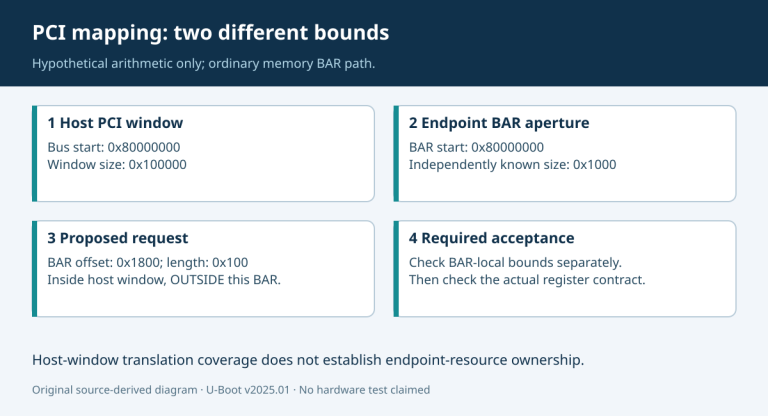
A PCI register mapping returns a pointer, yet the requested register displacement is outside the endpoint’s BAR.
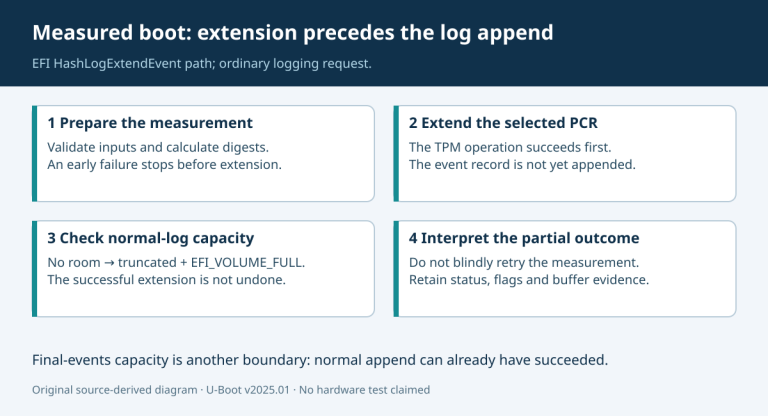
An EFI measurement operation reports that the event log is full.
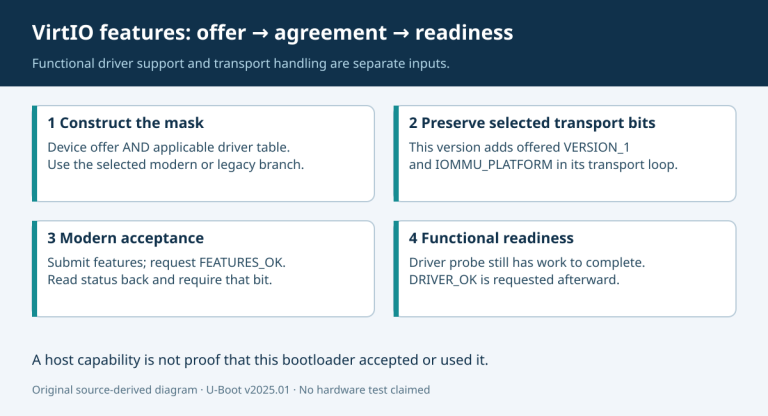
A virtual machine advertises a storage feature, but U-Boot does not use it.
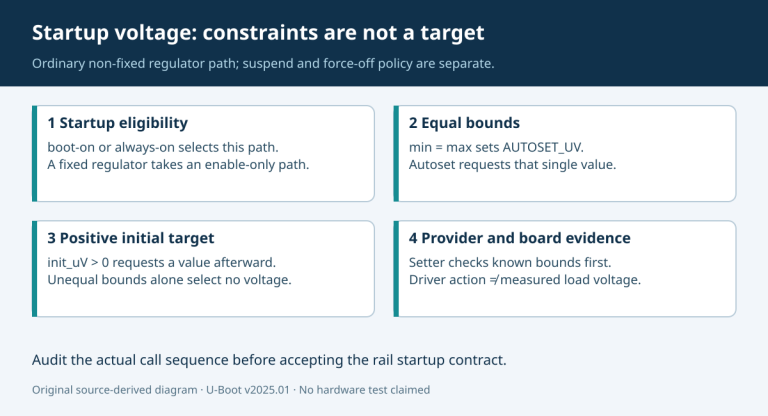
A board description allows several output voltages, and the boot log says its regulator was enabled.
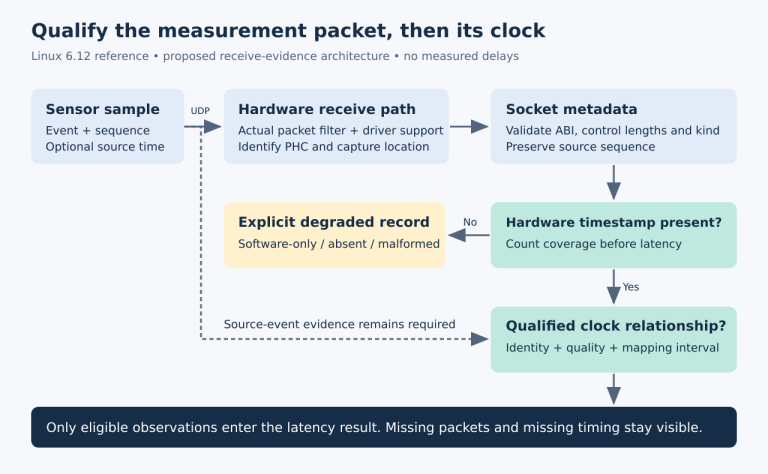
Qualify ordinary sensor-packet timestamp coverage, receive metadata and hardware-clock provenance before reporting acquisition latency on an embedded Linux gateway.
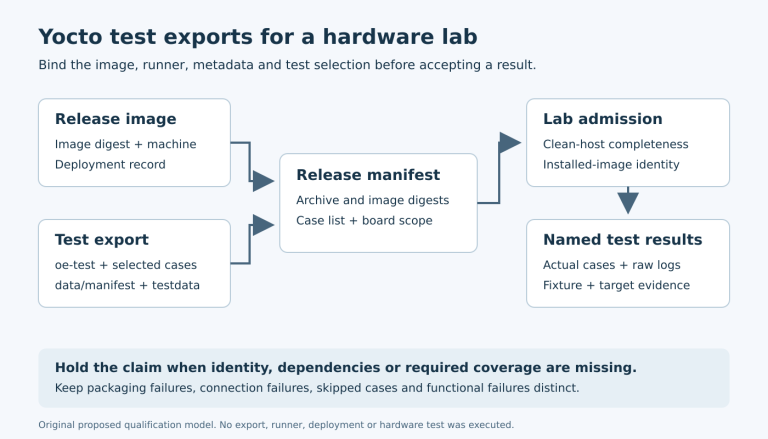
Qualify a standalone Yocto test-export bundle against its actual runner, image metadata and target identity before using hardware-lab results for release acceptance.
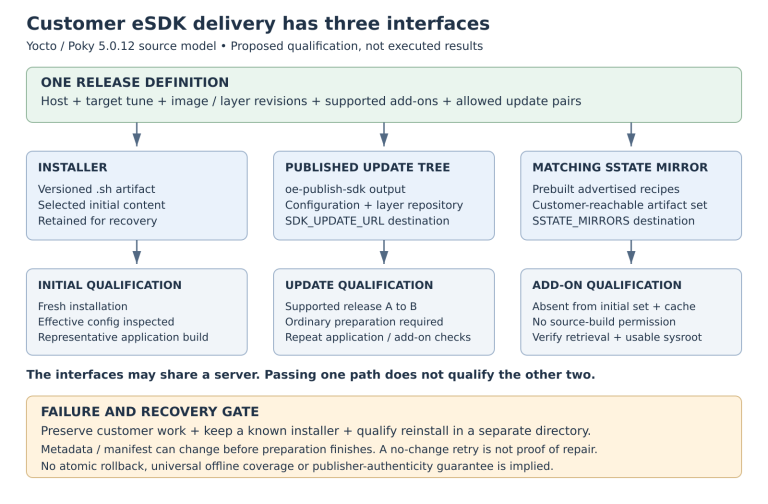
Design the standalone customer eSDK handover around a versioned installer, a usable update tree, matching prebuilt add-ons and a recovery acceptance path.
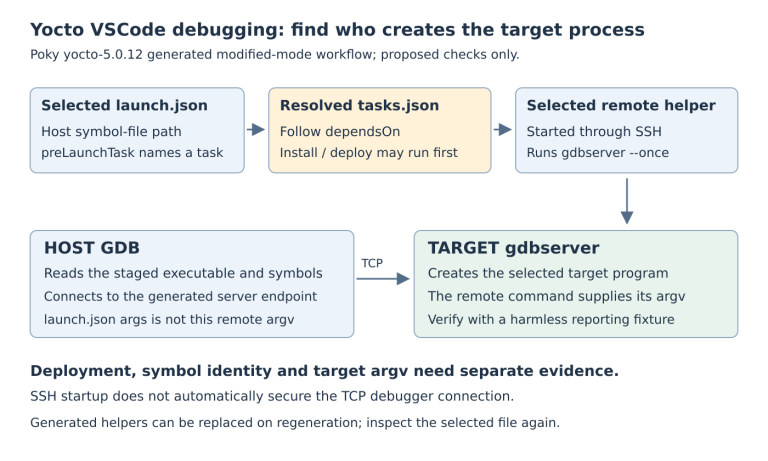
Why does changing args in a devtool-generated VSCode launch.json leave the target program arguments unchanged, and why can starting the debug session also replace the target executable?
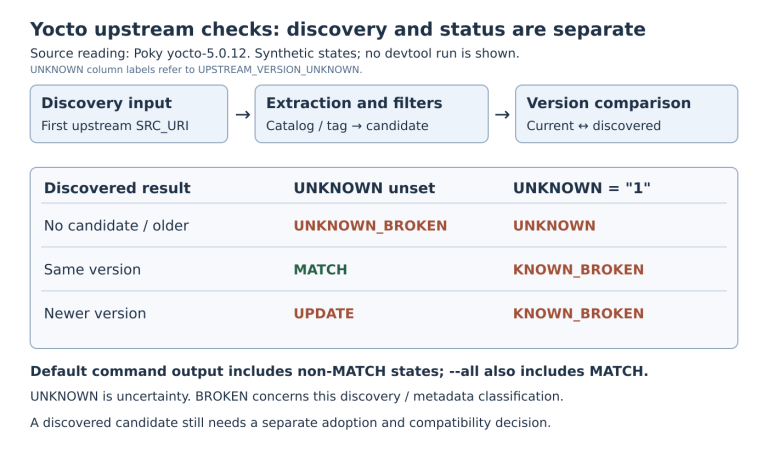
Why does devtool fail to identify a known upstream release, or report UNKNOWN rather than a usable upgrade, while the existing recipe still fetches and builds successfully?
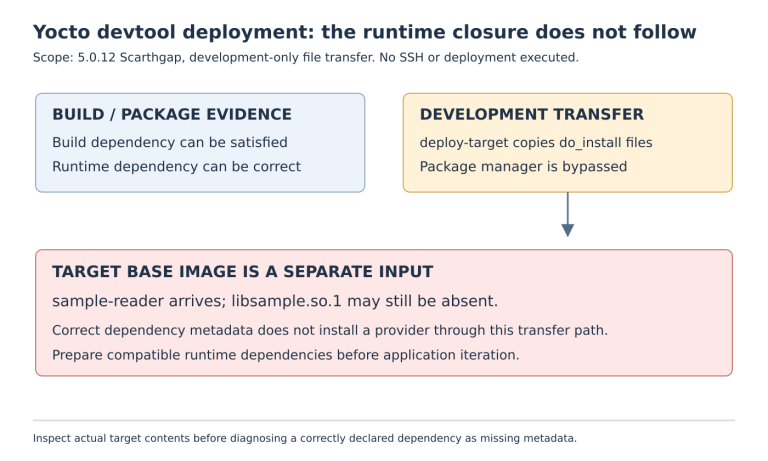
Why does an application deployed with devtool fail to find a shared library that its Yocto recipe correctly declares and packages?