Linux Timer Slack: Find the Per-Thread Coalescing Policy Behind a Late Wait
Why can a worker inherit a different timeout-coalescing allowance, and why does setting PR_SET_TIMERSLACK to zero not disable that allowance?
Board-level Linux integration, U-Boot, device trees, kernel drivers and peripheral bring-up. Separate power and hardware checks from software adaptation, and define a recoverable boot path.
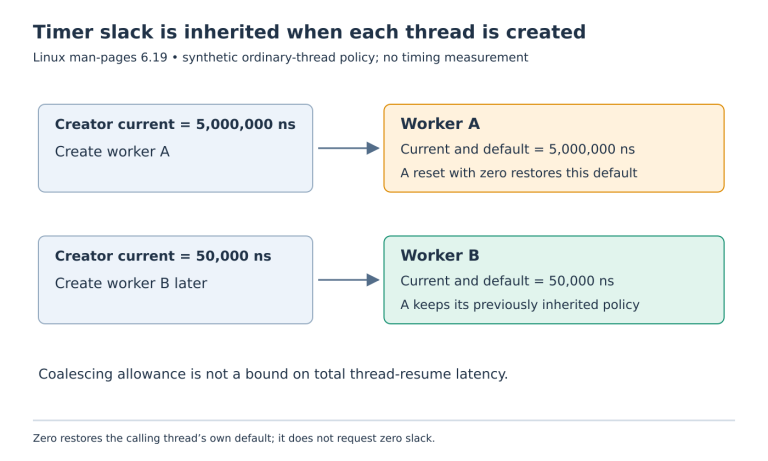
Why can a worker inherit a different timeout-coalescing allowance, and why does setting PR_SET_TIMERSLACK to zero not disable that allowance?
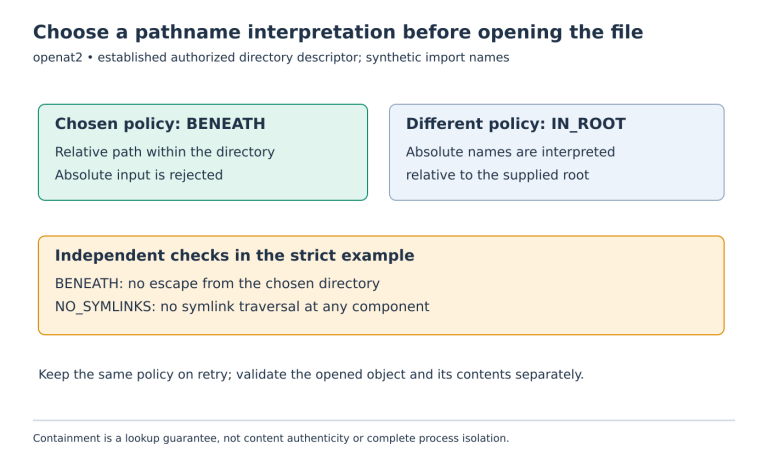
Why does checking a path string or using O_NOFOLLOW only on its final component fail to define the full directory-resolution policy of an imported configuration?
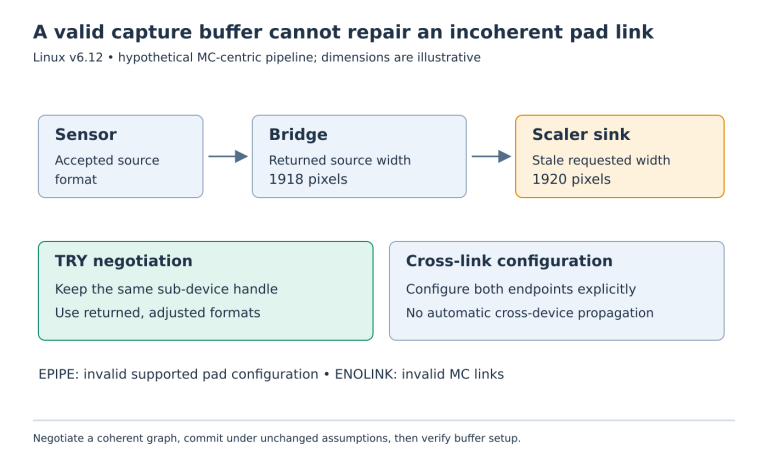
Why can a capture node accept its format and buffers but STREAMON still reject the pipeline because connected sub-device pads disagree?
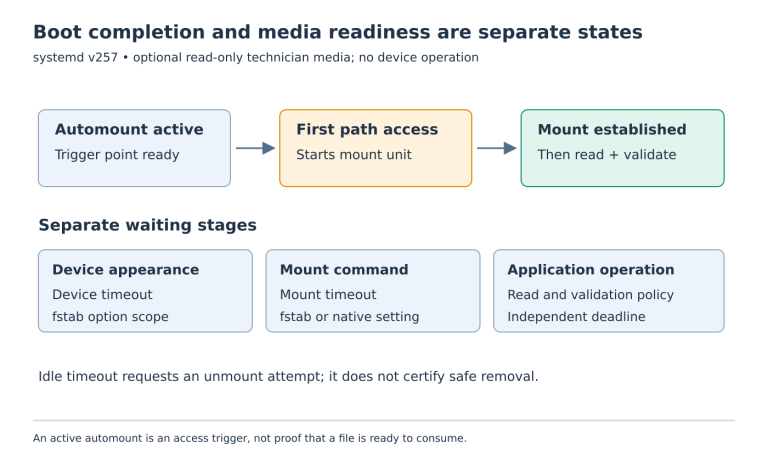
Why can a device boot successfully with a nofail removable-media entry yet its application wait or fail when it first opens the automount path?
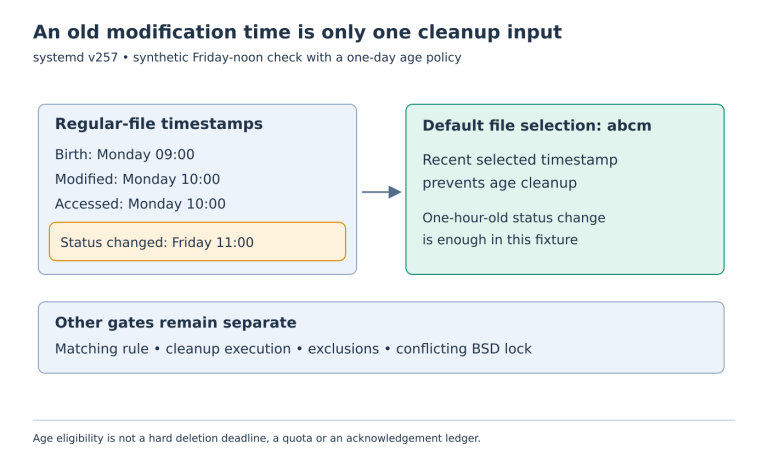
Why can a temporary acquisition file remain after its modification time is older than the configured cleanup age?
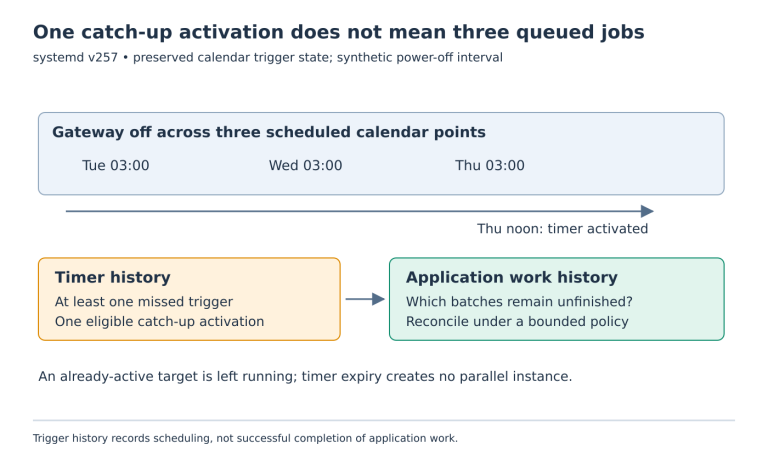
After an embedded device was off for several scheduled runs, why does Persistent=yes produce a catch-up activation rather than one invocation per missed interval?
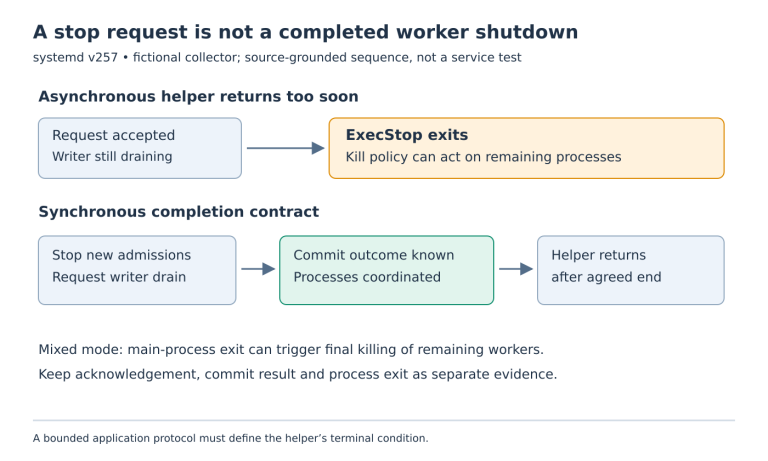
Why does a daemon lose unfinished worker cleanup when its ExecStop helper only sends a shutdown request and immediately exits?
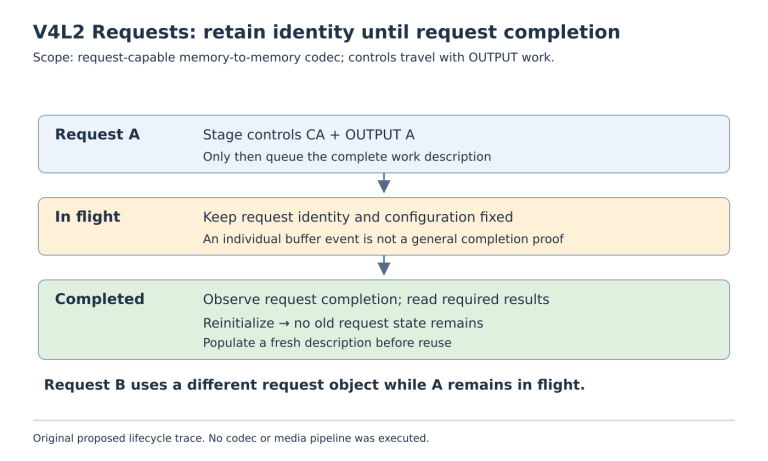
When a codec or camera uses the Request API, when do staged controls become associated with buffers and when may the request object be reset for reuse?
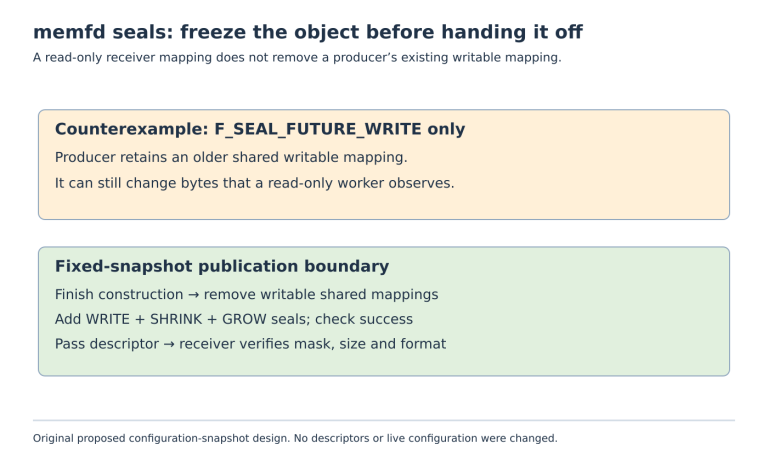
Why does a read-only receiver mapping fail to guarantee immutable configuration while another process retains a writable shared mapping?
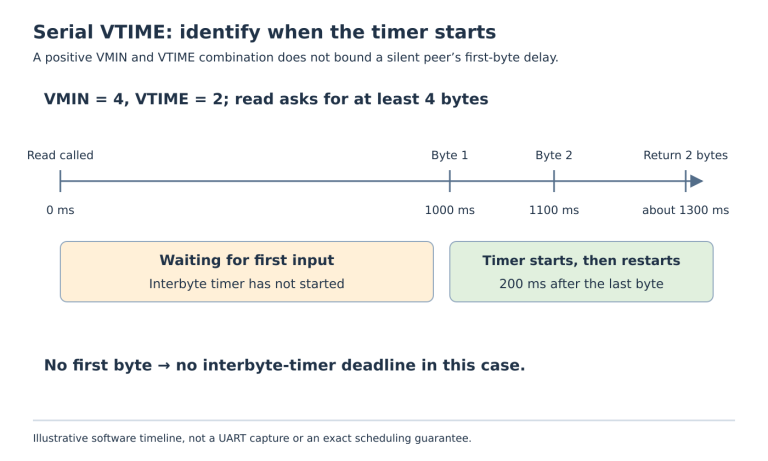
Why can a noncanonical serial read wait indefinitely with both VMIN and VTIME nonzero, even though the application configured a timeout?