mlockall on Embedded Linux: Budget Future Heap and Stack Growth Before Enabling MCL_FUTURE
Why can adding MCL_FUTURE make later allocations fail or stack growth fault while the device still has free RAM?
Board-level Linux integration, U-Boot, device trees, kernel drivers and peripheral bring-up. Separate power and hardware checks from software adaptation, and define a recoverable boot path.
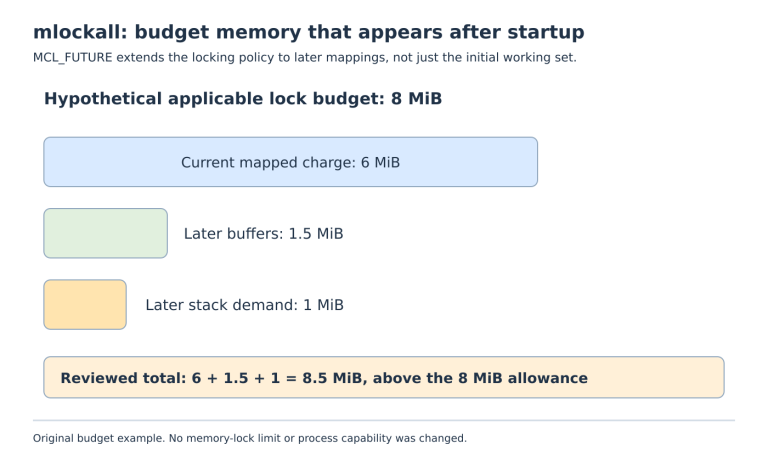
Why can adding MCL_FUTURE make later allocations fail or stack growth fault while the device still has free RAM?
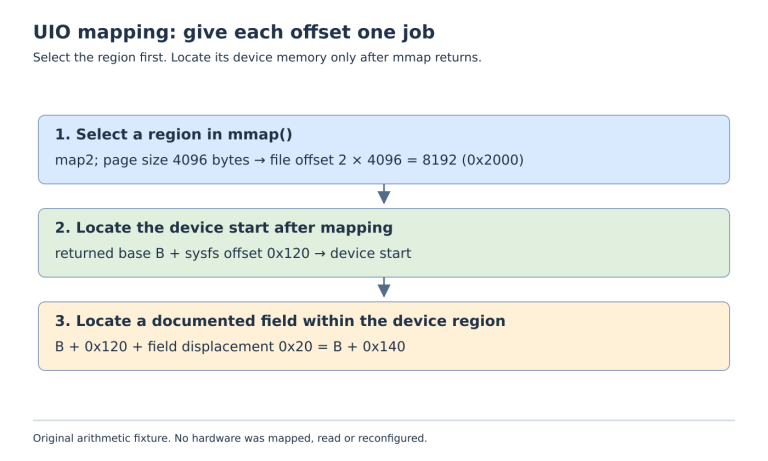
Why can using a physical register address as mmap offset select the wrong UIO map or fail even when the advertised device region exists?
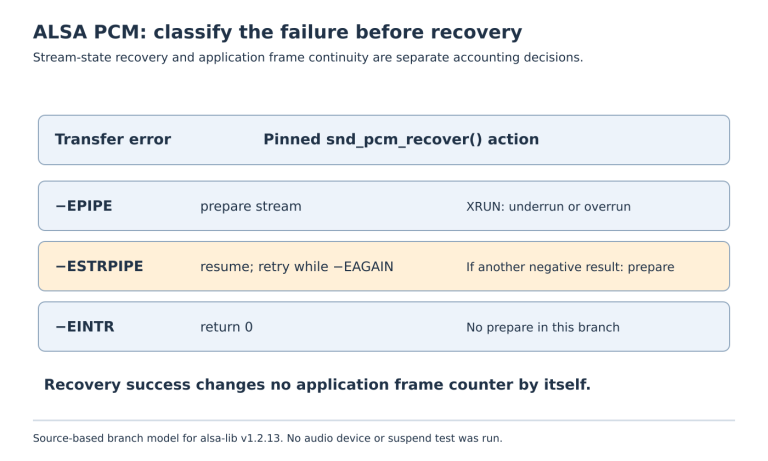
Why does snd_pcm_recover take a different path for EPIPE and ESTRPIPE, and what must an audio service still decide after it returns success?
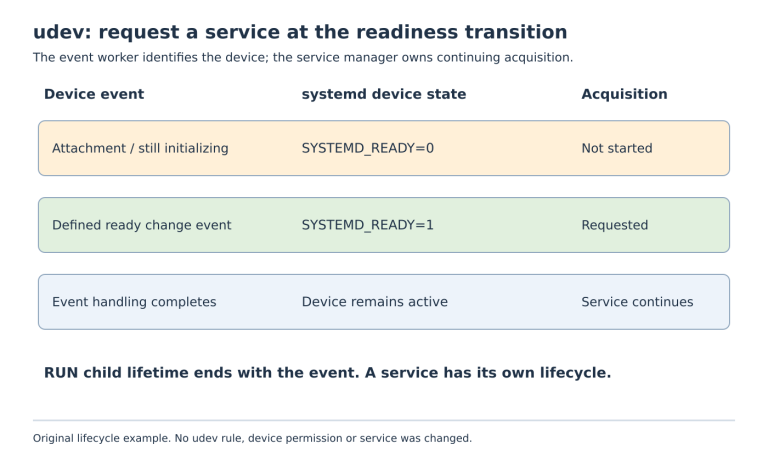
Why does a background acquisition helper launched by a udev RUN rule disappear after the device event finishes, and when is SYSTEMD_WANTS actually acted on?
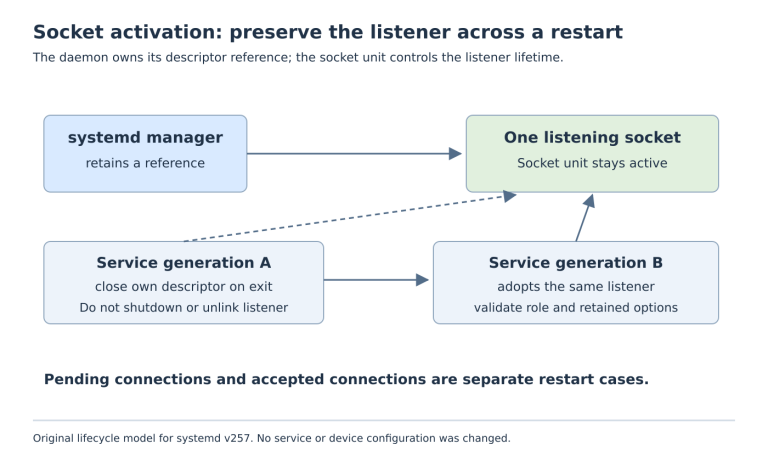
Why can a device daemon break later activations by calling shutdown on the listening socket it inherited from systemd?
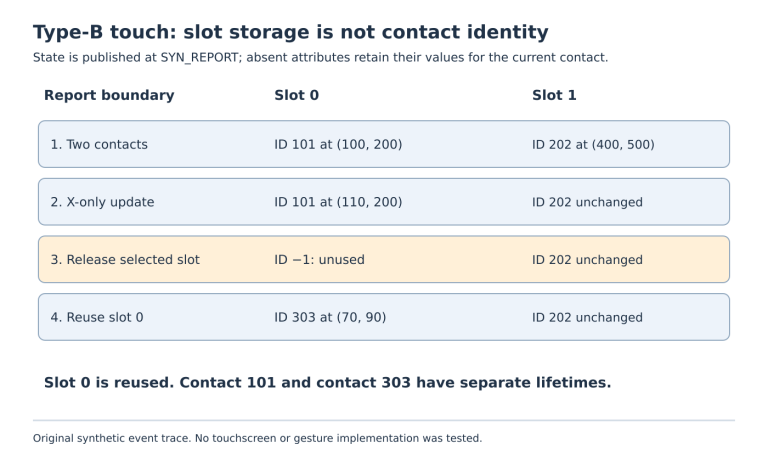
Why can a two-finger evdev reader move the wrong contact when it treats ABS_MT_SLOT as a permanent finger identifier or clears unchanged coordinates every frame?
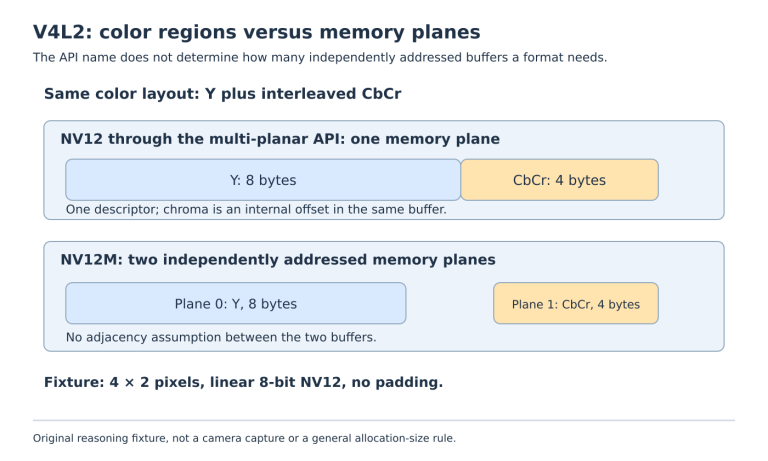
Why does an NV12 frame contain luma and chroma planes while its V4L2 buffer description can still use one contiguous memory allocation?
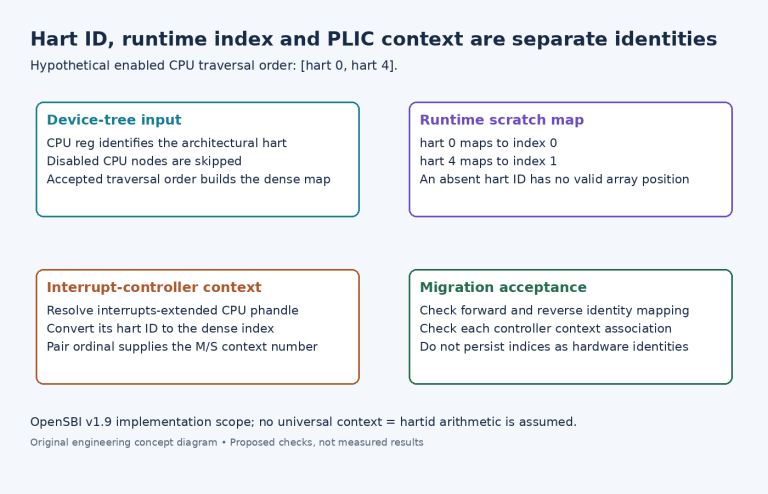
Trace OpenSBI v1.9 CPU identity from enabled device-tree nodes through dense scratch indices and independently ordered PLIC contexts during a platform migration.
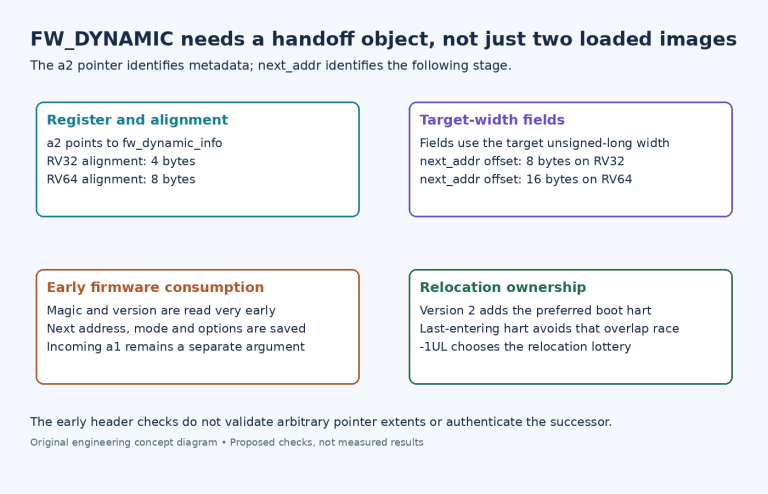
Diagnose OpenSBI FW_DYNAMIC handoff failures through a2, target-width information layout, early assembly checks and preferred-boot-hart relocation policy.
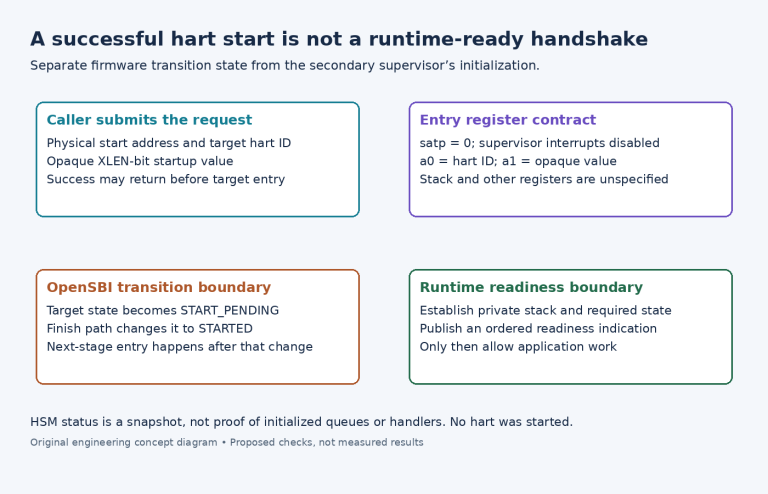
Integrate SBI secondary-hart startup through asynchronous HSM states, physical entry and unspecified-register handling, with a separate runtime-ready handshake.