Classic ESP32 Continuous ADC and Audio Can Compete for the Same I2S0 Resource
Trace the hidden I2S0 claim behind classic ESP32 continuous ADC, check automatic audio-port selection, and distinguish stopped conversion from released ownership.
Firmware requirements, peripheral integration, task coordination, fault diagnosis and verification for microcontroller products. Start from the actual hardware and acceptance conditions before choosing an implementation.
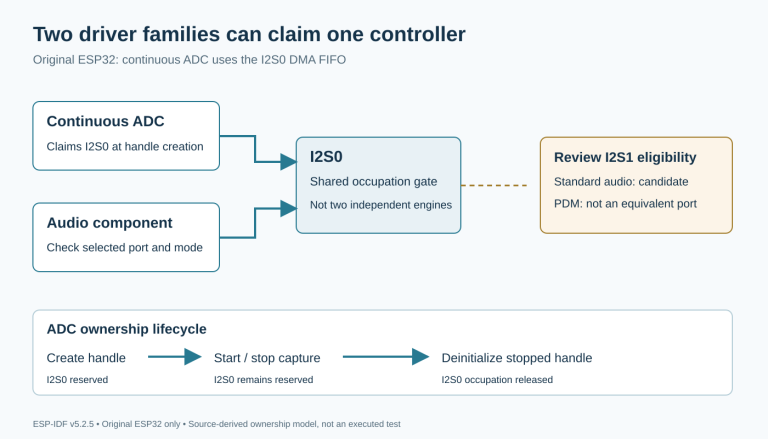
Trace the hidden I2S0 claim behind classic ESP32 continuous ADC, check automatic audio-port selection, and distinguish stopped conversion from released ownership.
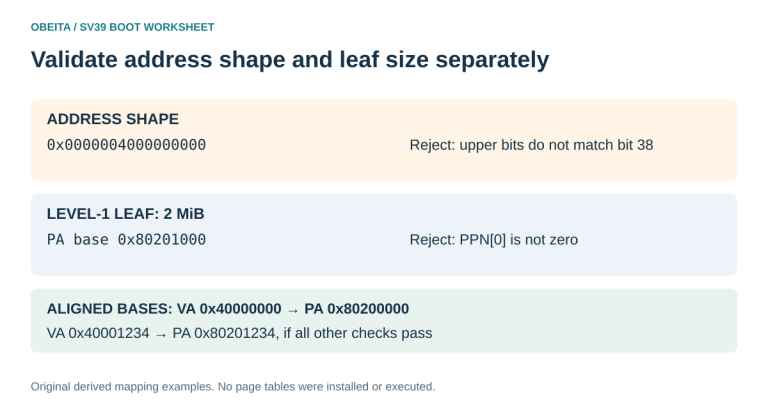
An RV64 supervisor faults immediately after enabling translation.
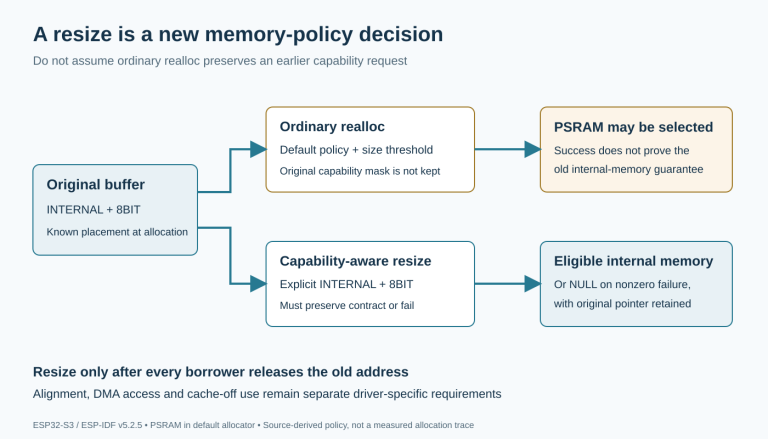
Trace ordinary realloc through ESP-IDF v5.2.5 before allowing a library to resize internal buffers, and preserve capability requirements across success and failure.
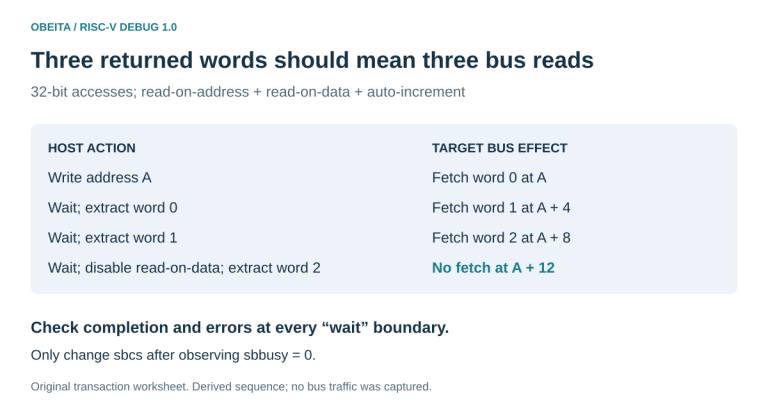
A debugger requests three words from a RISC-V target but the bus trace shows four reads.
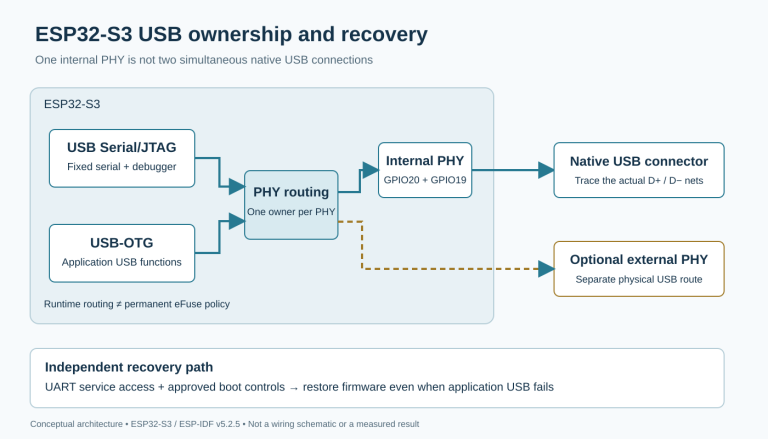
Separate ESP32-S3 USB controllers, runtime PHY selection and ROM download policy before choosing a product connector and recovery path.
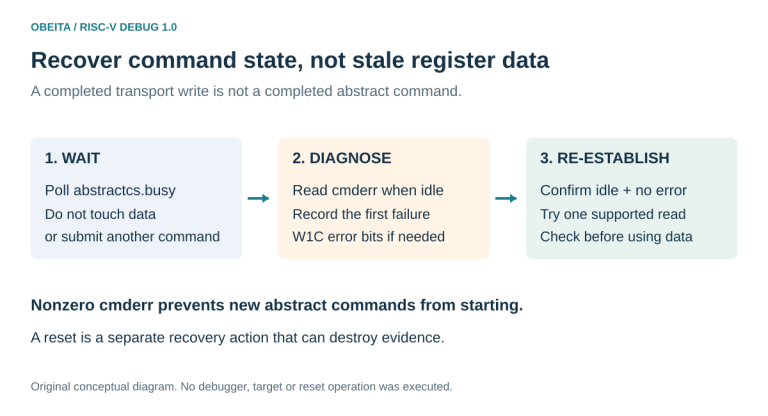
A debugger reads one CPU register successfully, encounters an unsupported CSR, and then reports that every later register read failed.
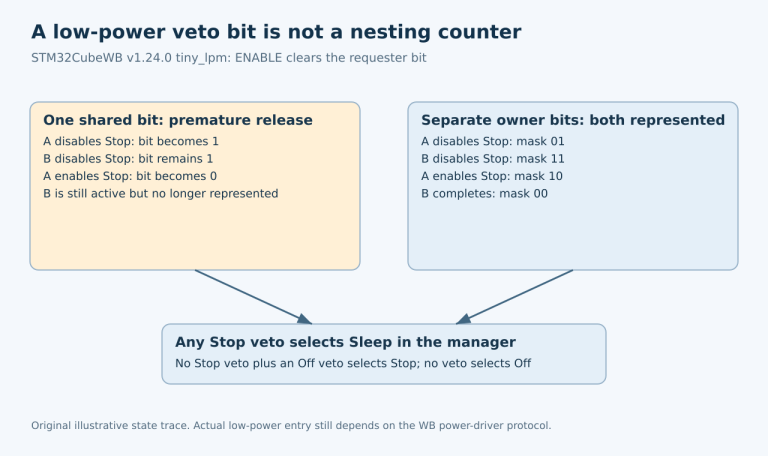
Treat STM32WB55 low-power requester bits as owned vetoes rather than reference-counted locks when asynchronous operations overlap.
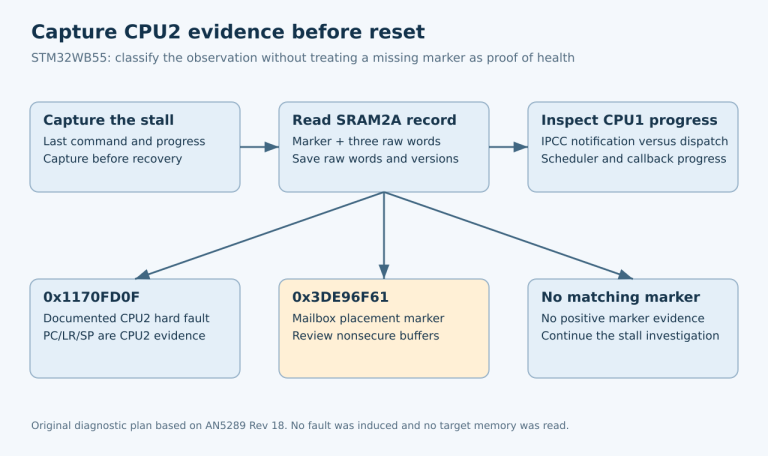
Capture STM32WB55 CPU2 fault markers and register evidence before reset erases the distinction between a radio fault and a CPU1 dispatch failure.
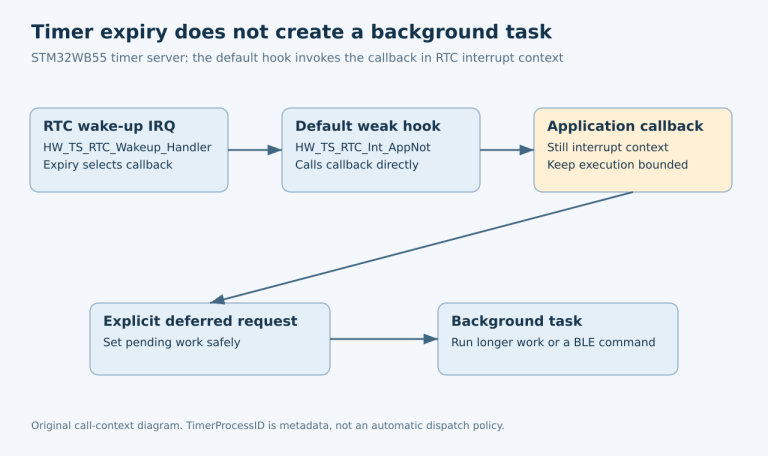
Keep STM32WB55 timer-server expiry in its actual RTC interrupt context unless the application explicitly implements deferred dispatch.
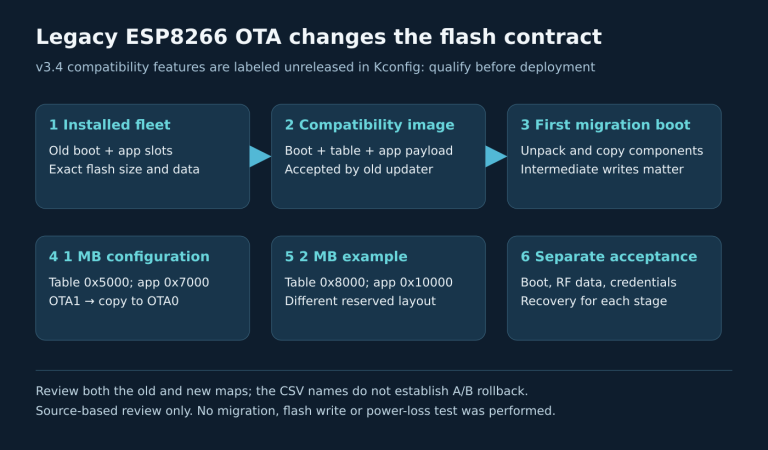
Review the unreleased legacy migration gate, different 1 MB and 2 MB example maps, retained parameters and 1 MB OTA1-to-OTA0 copy-back behavior.