RISC-V Cache-Block Operations: Diagnose Privilege Gating Before Assuming Zicbom Is Missing
Distinguish missing Zicbom from environment-gate traps, CBIE-directed flush semantics and address-access faults on cache-block management instructions.
Firmware requirements, peripheral integration, task coordination, fault diagnosis and verification for microcontroller products. Start from the actual hardware and acceptance conditions before choosing an implementation.
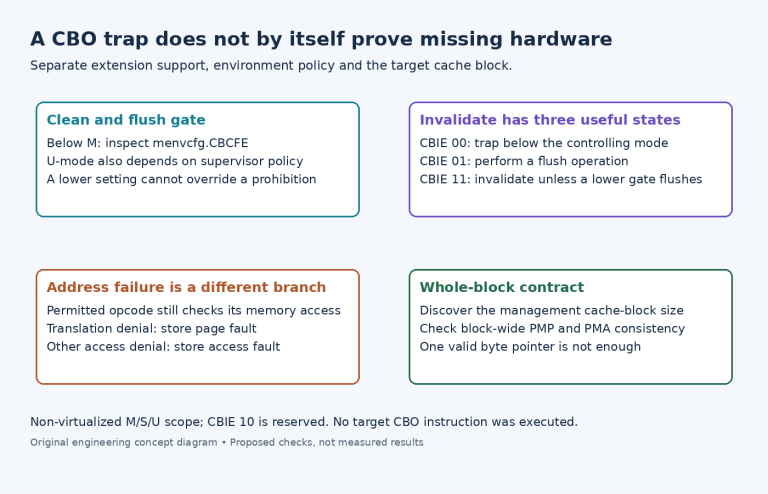
Distinguish missing Zicbom from environment-gate traps, CBIE-directed flush semantics and address-access faults on cache-block management instructions.
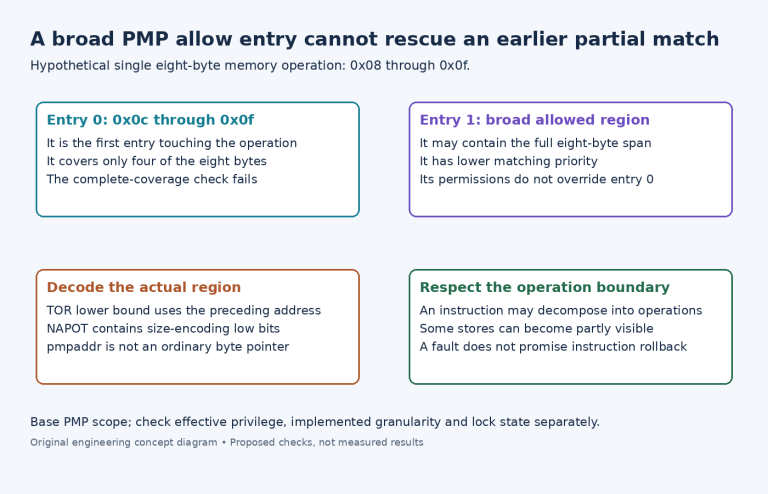
Analyze base PMP failures through encoded regions, first-match priority and full memory-operation containment, including decomposition and privilege limitations.
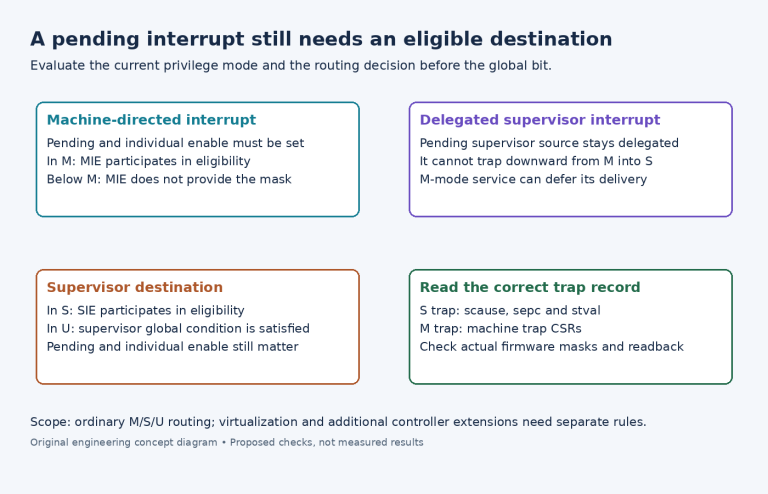
Diagnose pending RISC-V interrupts by evaluating delegation, current privilege and destination-specific enable predicates rather than treating global masking as universal.
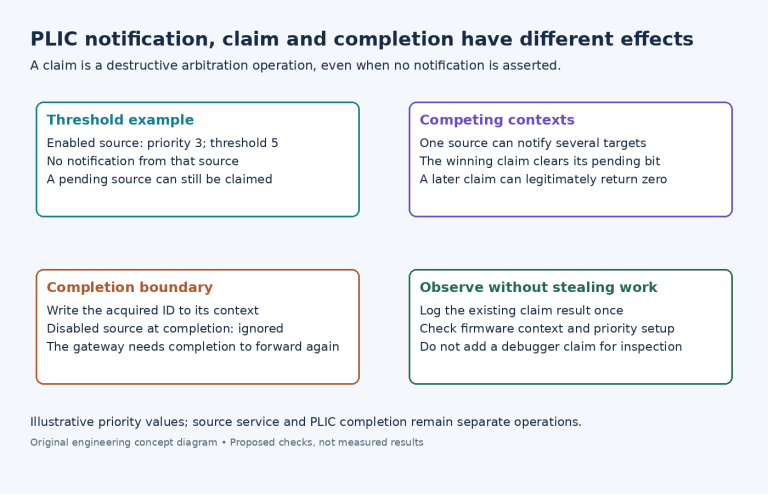
Explain PLIC zero claims, below-threshold destructive claims and ignored completions through the distinct notification, arbitration and gateway contracts.
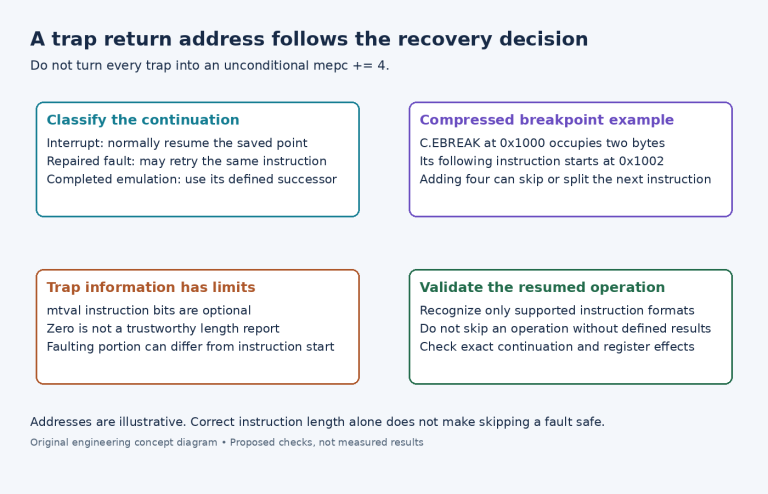
Define cause-specific RISC-V trap continuation instead of unconditional mepc increments, including compressed breakpoints and optional mtval instruction information.
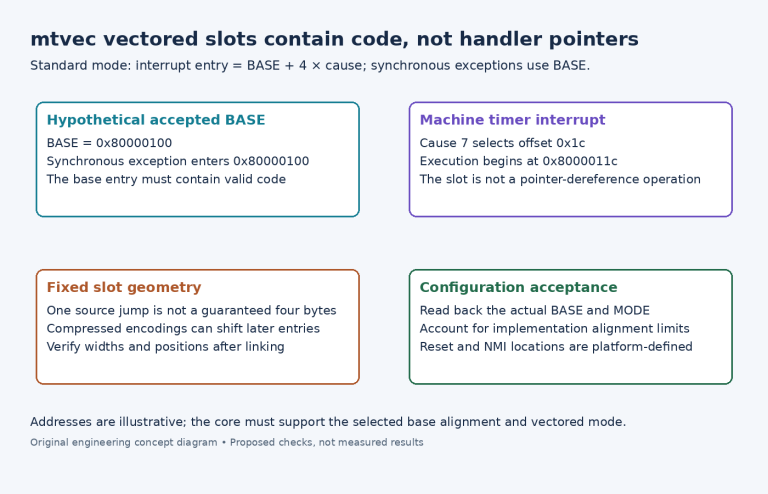
Build standard RISC-V mtvec vectored entries as executable four-byte slots, accounting for compression, WARL configuration and the separate synchronous-exception entry.
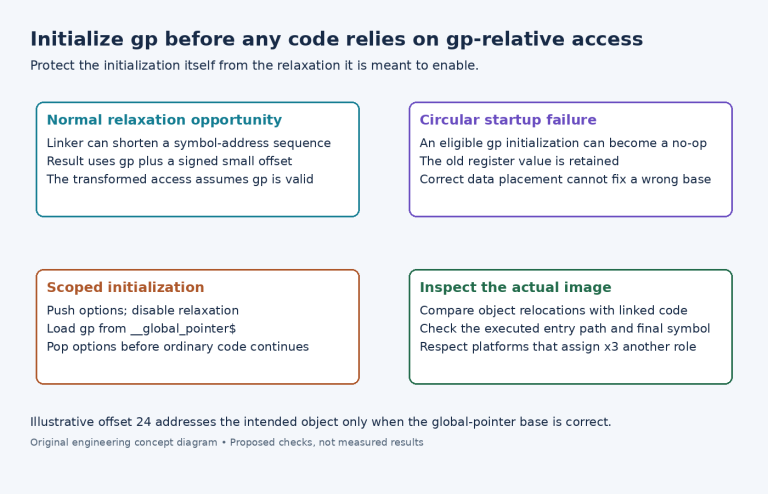
Locate RISC-V startup failures caused by gp initialization participating in global-pointer relaxation, then verify the protected sequence and platform x3 contract.
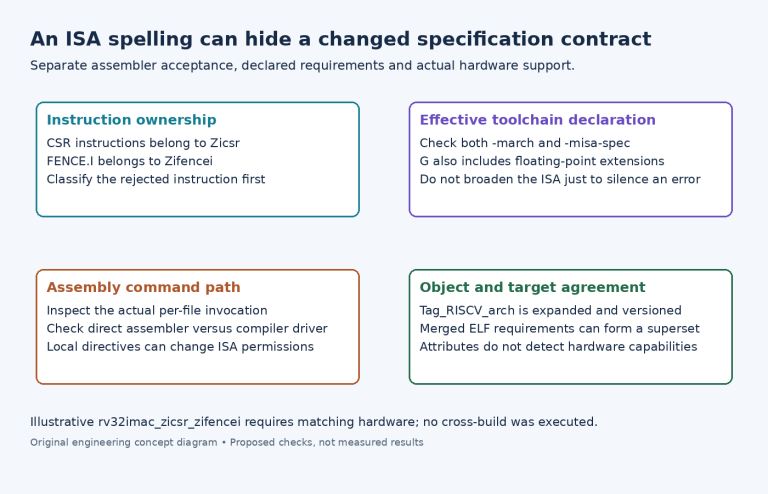
Diagnose RISC-V assembler regressions through named Zicsr/Zifencei requirements, GCC ISA-spec selection and expanded ELF architecture attributes.
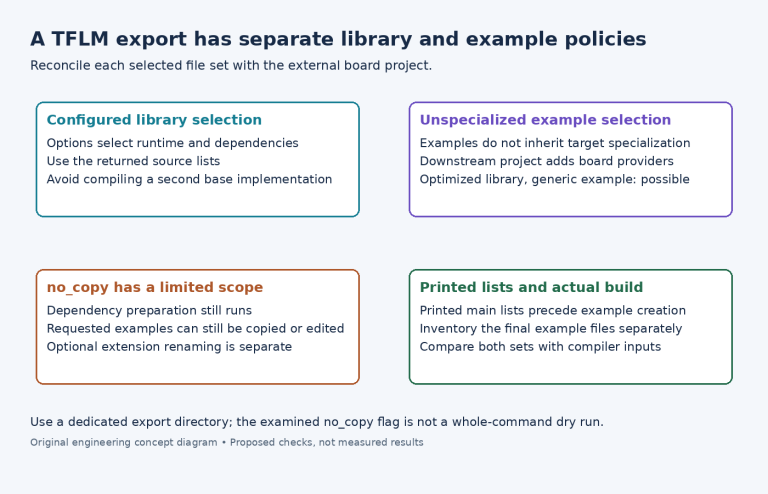
Debug TFLM exports by separating configured runtime manifests from unspecialized examples and by checking the actual side-effect scope of no_copy and printed lists.
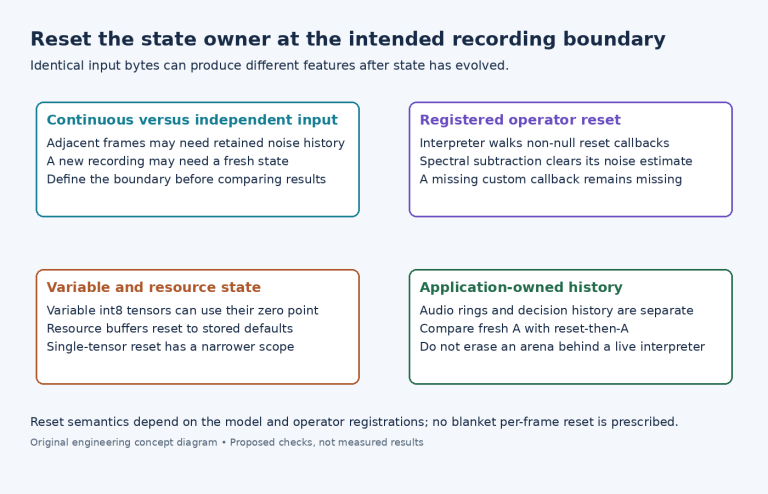
Locate TinyML state across registered operator callbacks, variable tensors, resource buffers and application history before choosing recording reset boundaries.