STM32CubeIDE Exception Traps Must Agree with Standalone Firmware
A deliberately faulty operation stops cleanly in STM32CubeIDE, yet the same firmware behaves differently after a cold start without the debugger.
Practical engineering guides to Modbus, serial connectivity and industrial IoT gateway validation.
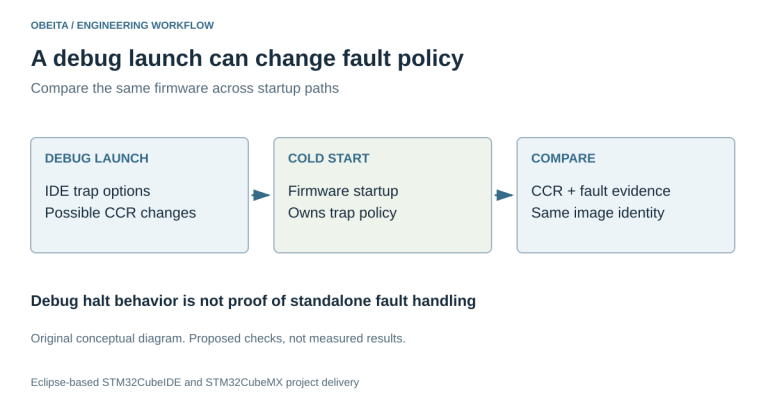
A deliberately faulty operation stops cleanly in STM32CubeIDE, yet the same firmware behaves differently after a cold start without the debugger.
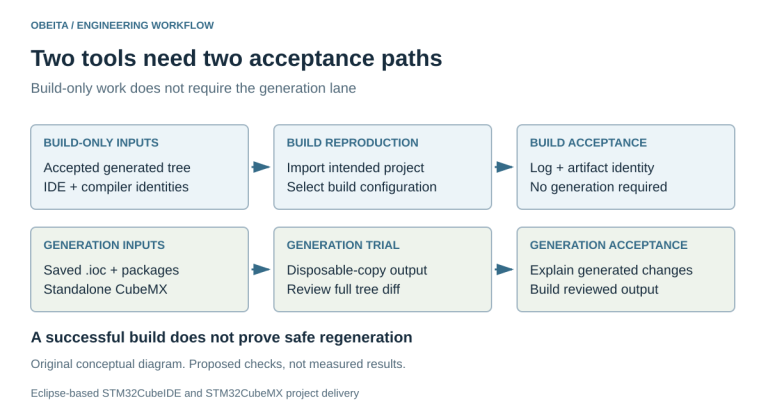
A receiver installs STM32CubeIDE 2.x, imports a delivered project, and cannot follow an old instruction to edit the pin configuration inside the IDE.
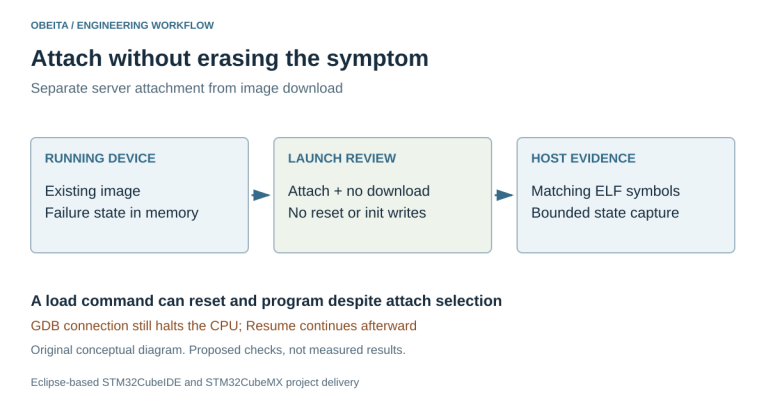
A board reaches an intermittent failure, an engineer starts debugging, and the failure disappears before the first register is inspected.
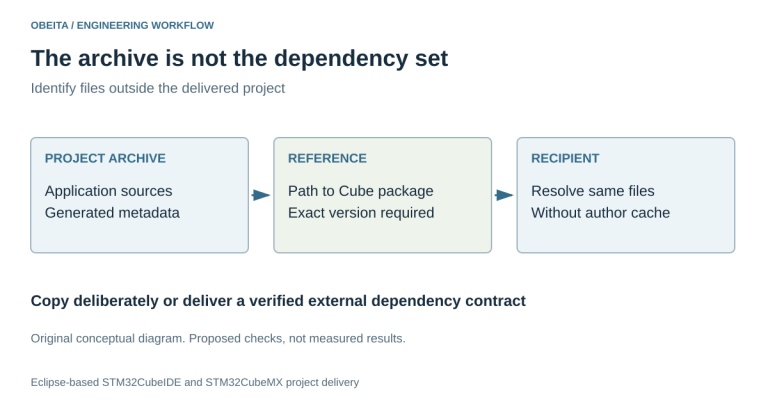
A project archive can contain every visible application file and still depend on a firmware repository outside the archive.
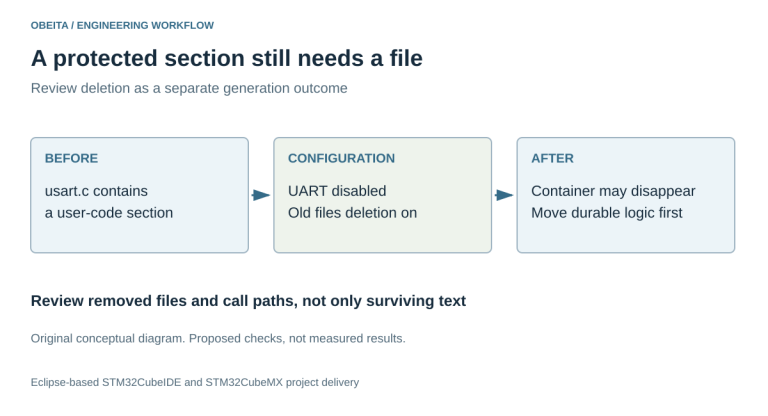
A CubeMX user-code section can survive regeneration while its surrounding peripheral remains enabled, then disappear when that peripheral’s generated file is removed.
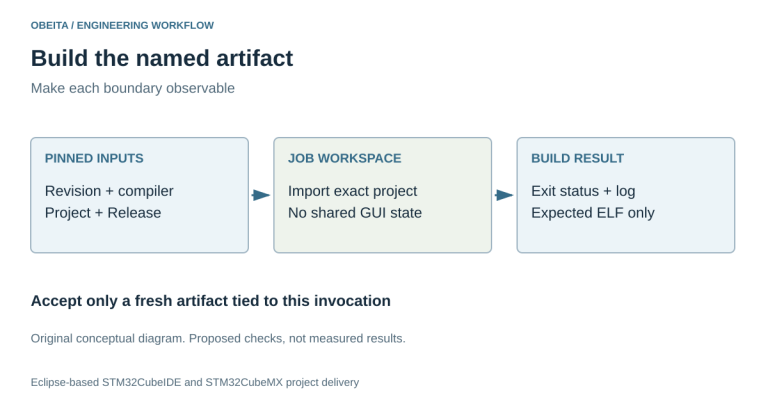
Define the workspace, configuration and output contract for STM32CubeIDE headless builds, then reject stale binaries and preserve build failures.
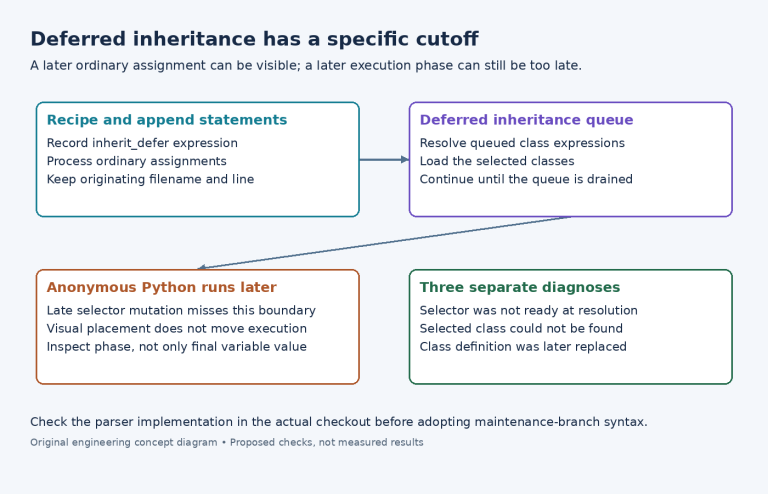
Trace inherit_defer queuing and finalization, including append availability and the anonymous-Python cutoff, then separate class-selection timing from lookup or later replacement.
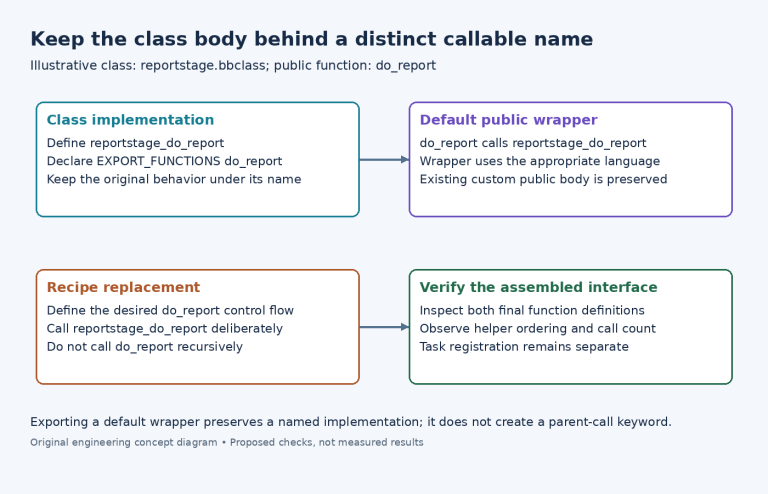
Use class-qualified implementations and generated EXPORT_FUNCTIONS wrappers to preserve callable class behavior across recipe replacement, including Python invocation and wrapper-selection limits.
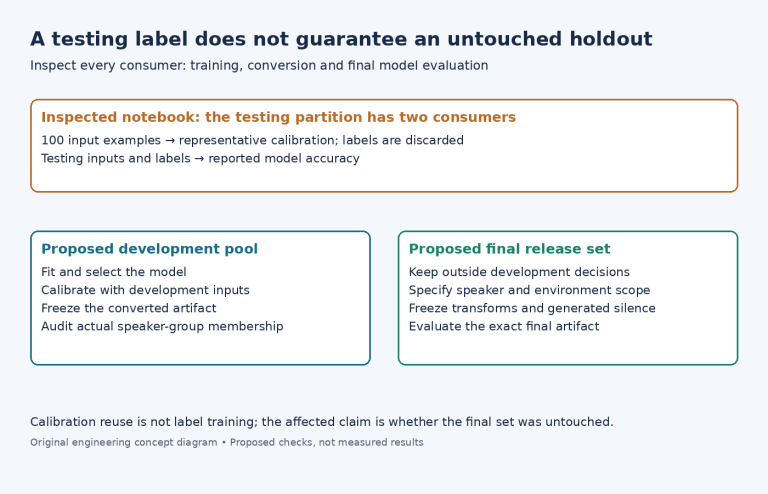
Audit the Micro Speech notebook’s calibration and evaluation data consumers, then define an untouched release set with explicit speaker grouping and generated-audio provenance.
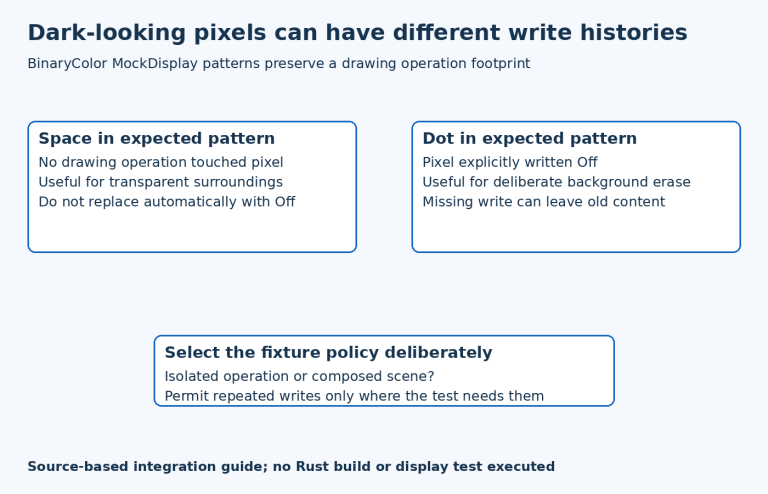
Use MockDisplay optional pixel state and explicit strictness settings to test erasure and overlay behavior in Rust graphics.