Zephyr OS Random APIs: Keep Entropy Failure from Becoming a Silent Security Downgrade
Do not downgrade a failed secure-random request. Source-based integration review with explicit failure boundaries.
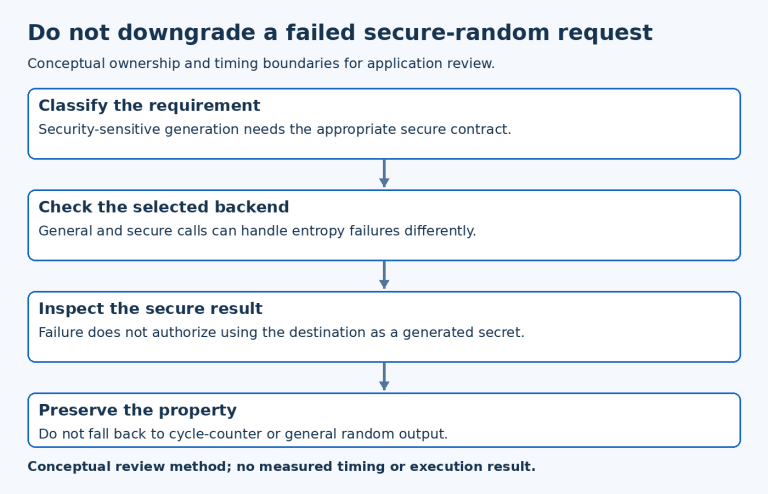
Do not downgrade a failed secure-random request. Source-based integration review with explicit failure boundaries.
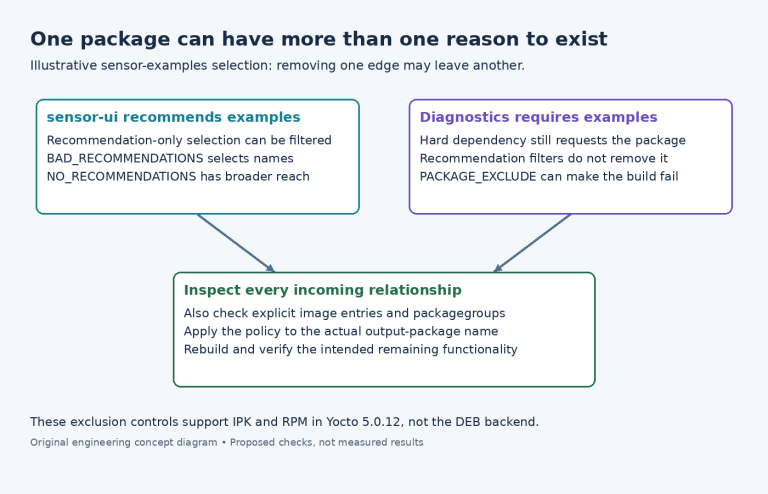
Trace why Yocto installs a recommended package and choose between selective recommendation filters, blanket filtering and a hard package exclusion.
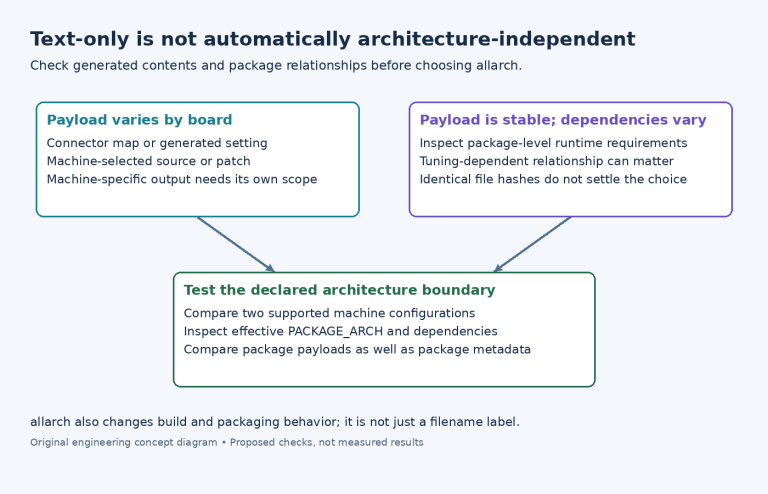
Classify Yocto packages using payload and dependency invariants, and diagnose why text-only recipes can still be inappropriate for allarch.
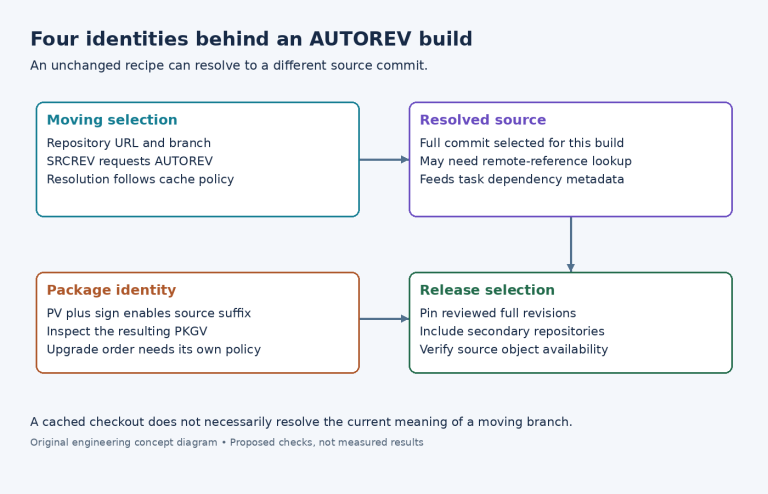
Explain Yocto AUTOREV resolution, revision-cache behavior, pre-task source lookup, and the separate package-version identity needed before freezing a release revision.
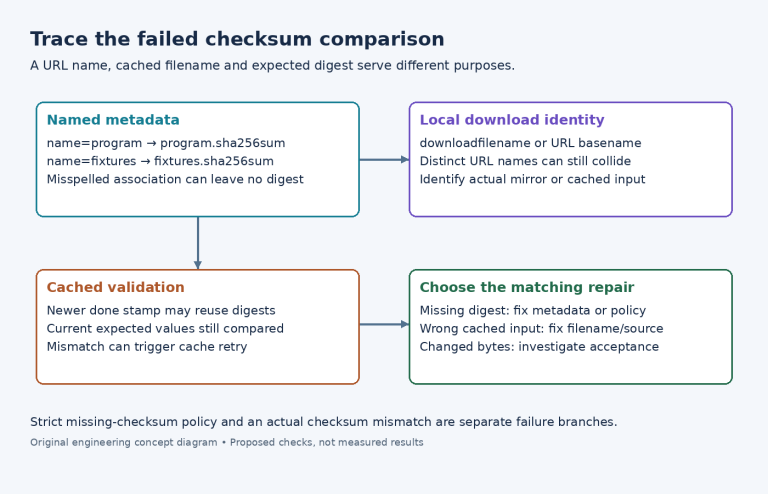
Diagnose Yocto archive checksum failures through named URI flags, download filename collisions, actual mirror selection, done-stamp digest reuse and strict missing-checksum policy.
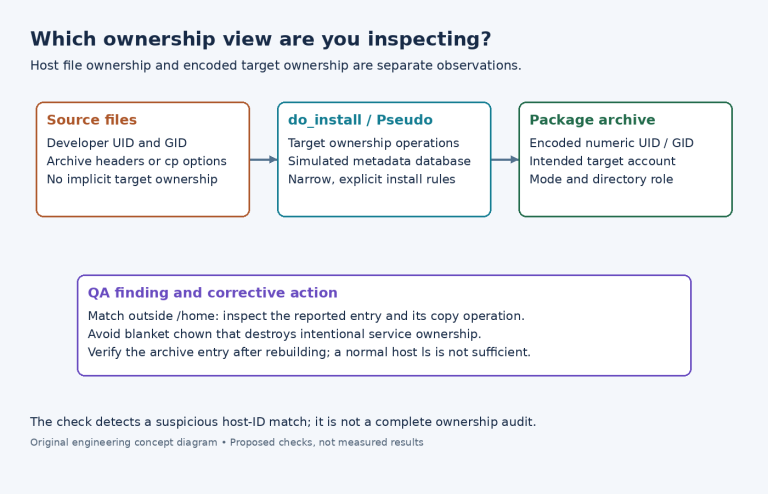
Diagnose Yocto host-user-contaminated findings by tracing ownership-preserving copies, respecting Pseudo’s simulated view, and inspecting numeric package ownership.
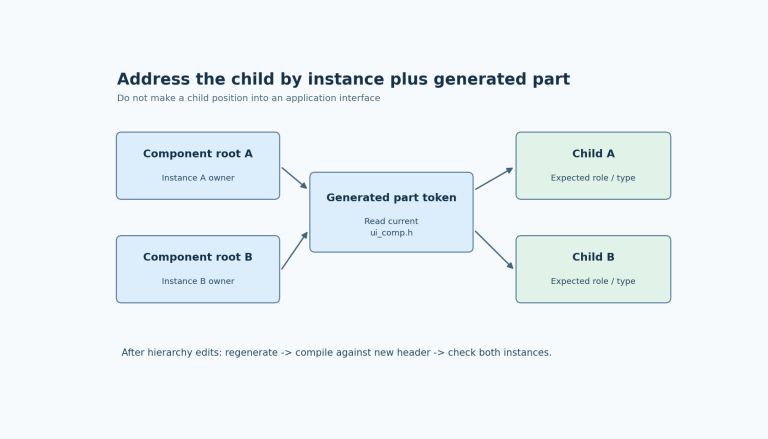
How can dynamically created component instances access the intended child without hard-coded child positions or obsolete part define names?
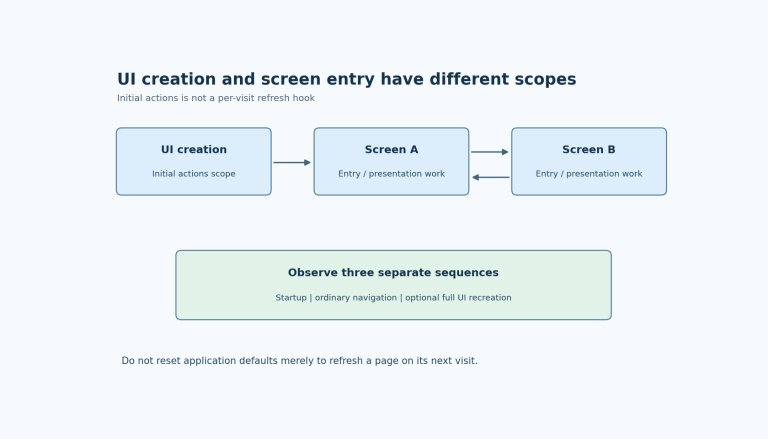
Which initialization belongs in one-time Initial actions versus screen load events when the same screen is revisited?
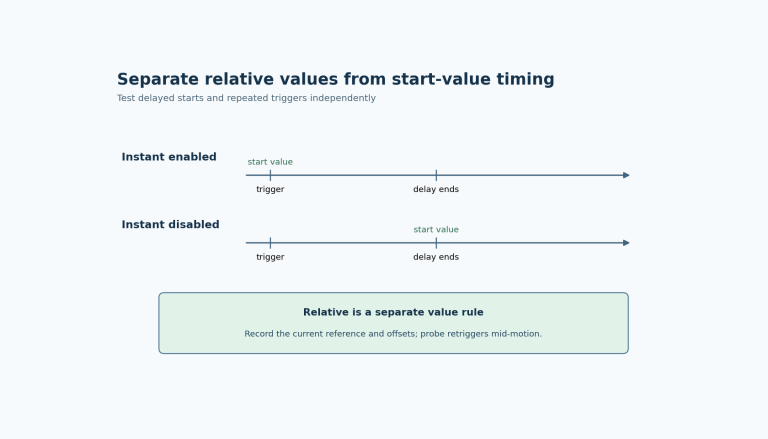
How can relative animation endpoints and the Instant setting be tested when a control is triggered again before the previous motion ends?
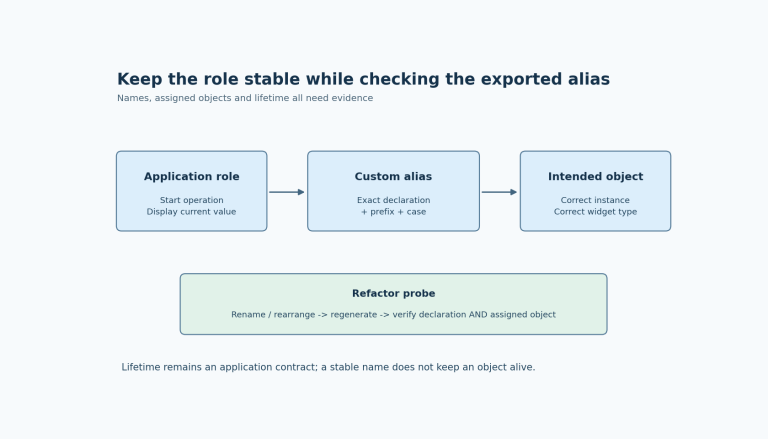
How can semantic custom aliases reduce generated-name coupling without hiding duplicate aliases or invalid object lifetimes?