STM32G474 DMAMUX Overruns: Why a Clear Flag Can Hide a Lost Trigger
Can a G474 request-generator pipeline lose a trigger without leaving an overrun flag, and how should timing and concurrent channels be constrained?
Firmware requirements, peripheral integration, task coordination, fault diagnosis and verification for microcontroller products. Start from the actual hardware and acceptance conditions before choosing an implementation.
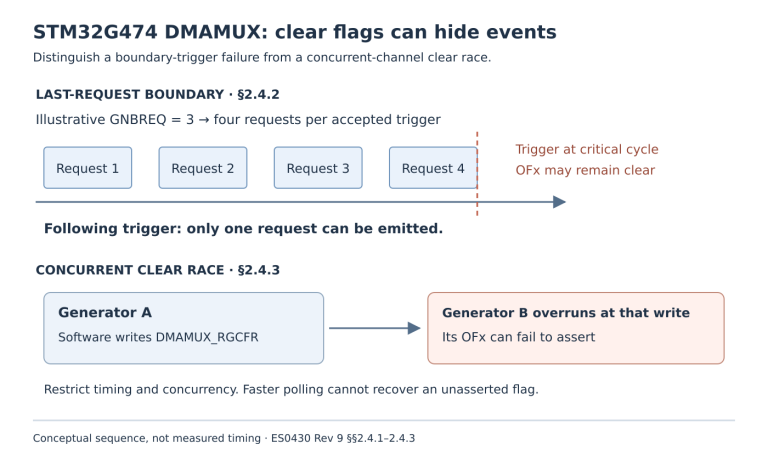
Can a G474 request-generator pipeline lose a trigger without leaving an overrun flag, and how should timing and concurrent channels be constrained?
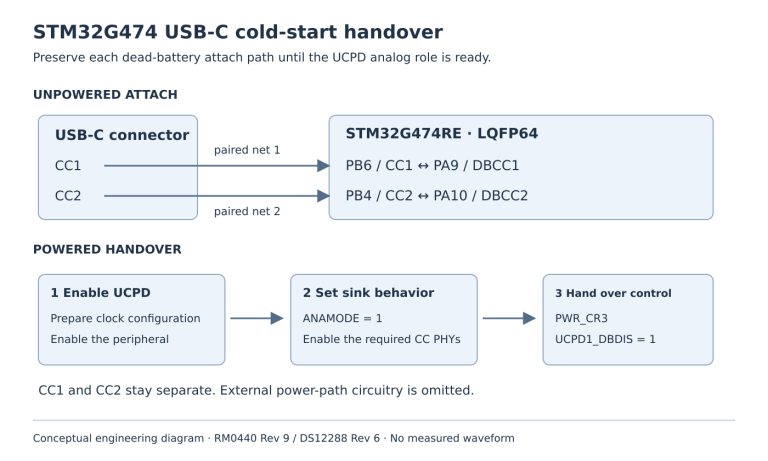
Why does a G474 USB-C sink fail to power up from an unpowered state, or detach when firmware takes over the CC pins?
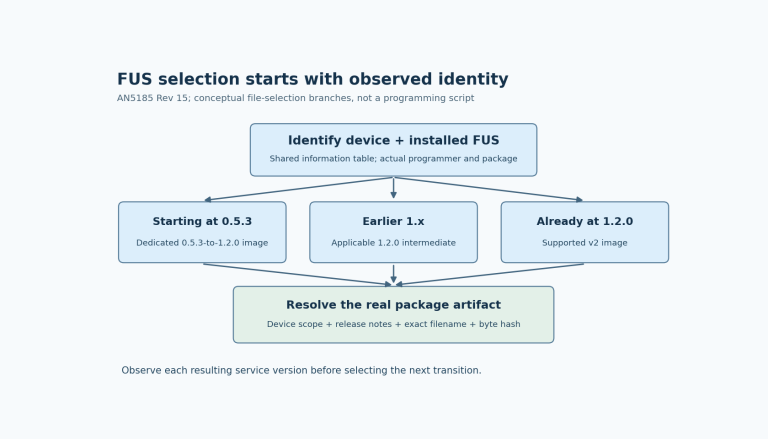
Which FUS binary matches the actual installed service version and WB device, when the factory inventory contains different starting states?
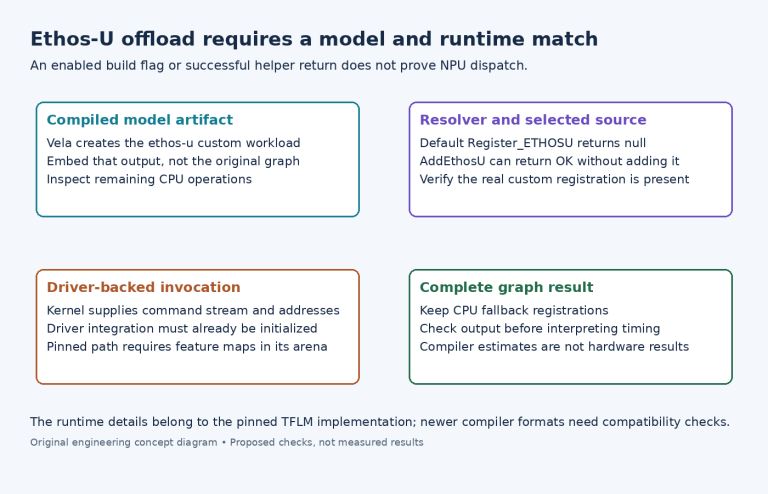
Trace TinyML Ethos-U offload from Vela-generated custom operations through the nullable resolver registration and the driver-backed runtime kernel.
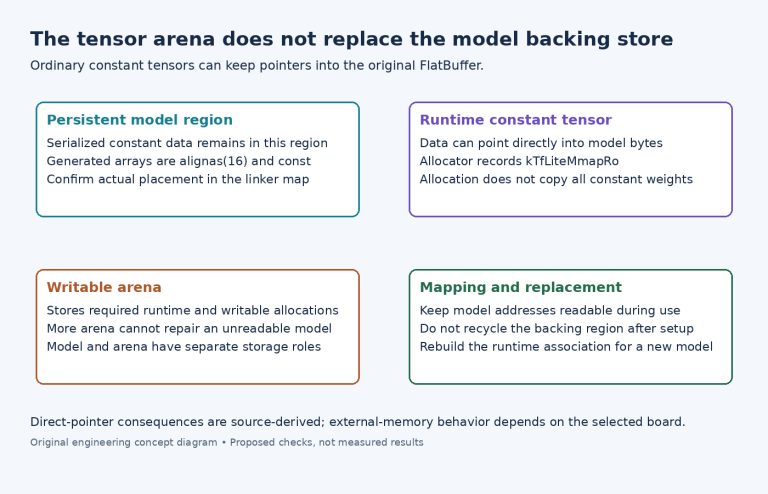
Explain why TFLM constants can retain direct FlatBuffer pointers after allocation and how generated array placement or external-memory mapping affects inference lifetime.
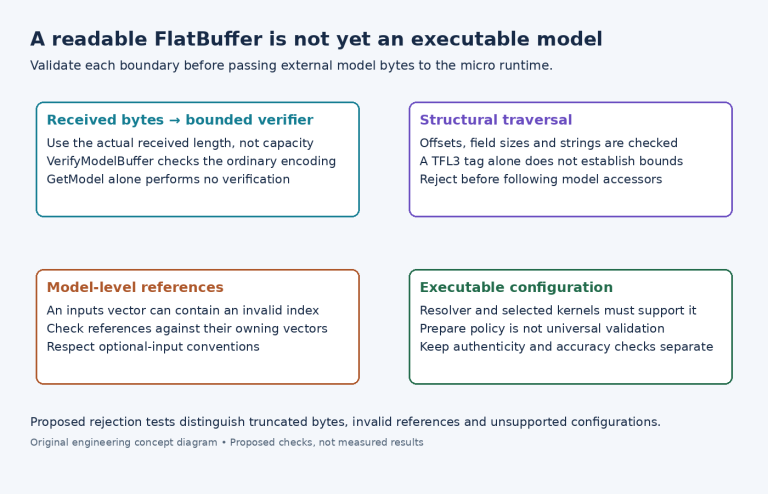
Separate TFLM model accessors, length-bounded FlatBuffer verification, cross-reference validation and kernel compatibility before allocating tensors.
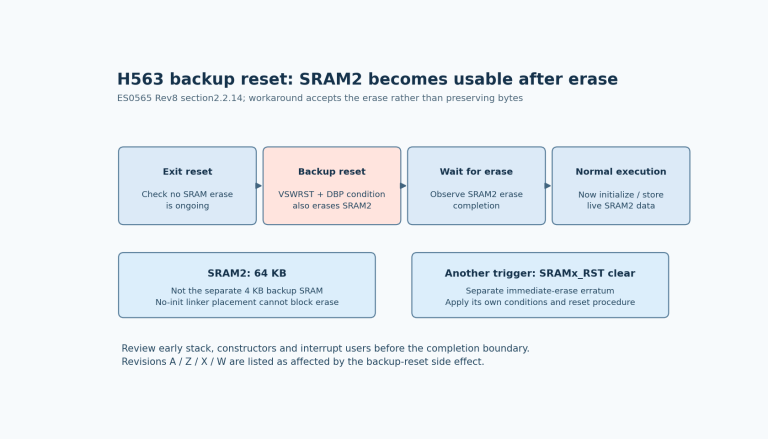
Why can an SRAM2 record disappear during RTC or backup-domain startup even when ordinary startup leaves it untouched?
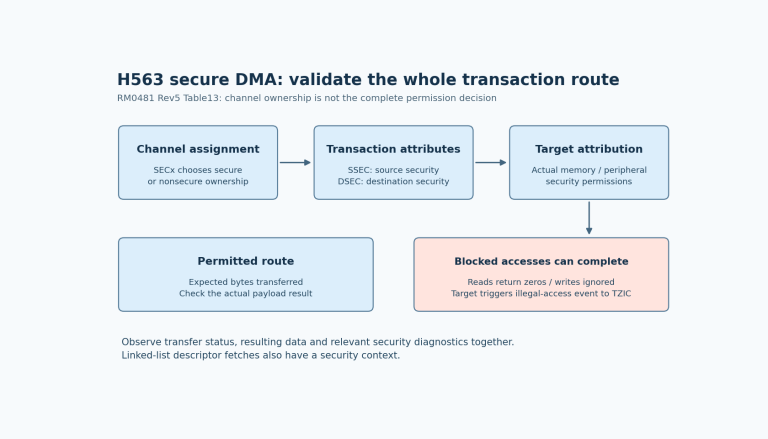
Why can an H563 DMA completion coexist with zeros or an unchanged destination after security attribution changes?
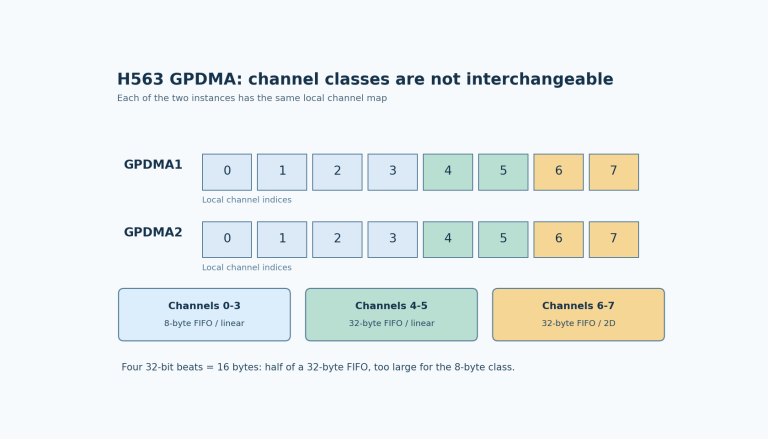
How should concurrent H563 data paths share DMA channels when FIFO depth and 2D addressing are not uniform?
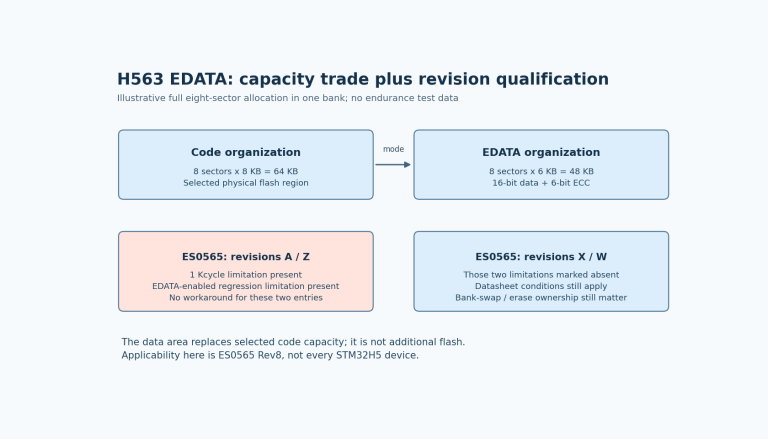
When can H563 high-cycle flash replace external configuration storage without breaking the image layout or service plan?