RISC-V MPRV Helpers: Apply the Caller’s Memory Rules Without Changing Instruction Fetch
Why can an M-mode helper execute normally but fault when loading a supervisor or user address, and how do MPRV, MPP, MXR and SUM change that access?
Firmware requirements, peripheral integration, task coordination, fault diagnosis and verification for microcontroller products. Start from the actual hardware and acceptance conditions before choosing an implementation.
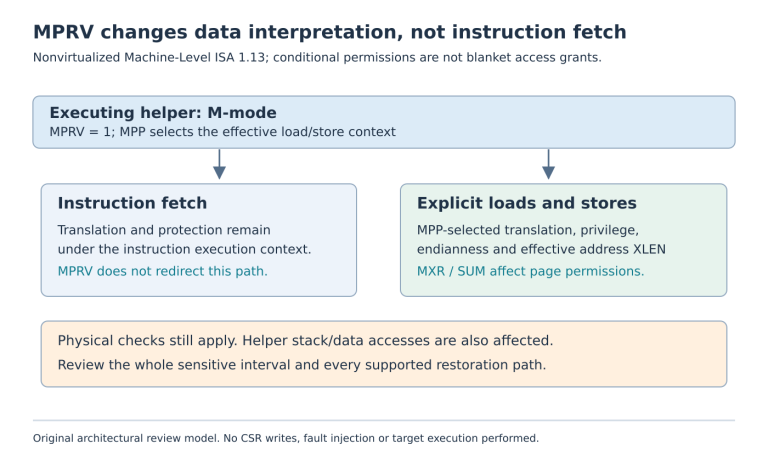
Why can an M-mode helper execute normally but fault when loading a supervisor or user address, and how do MPRV, MPP, MXR and SUM change that access?
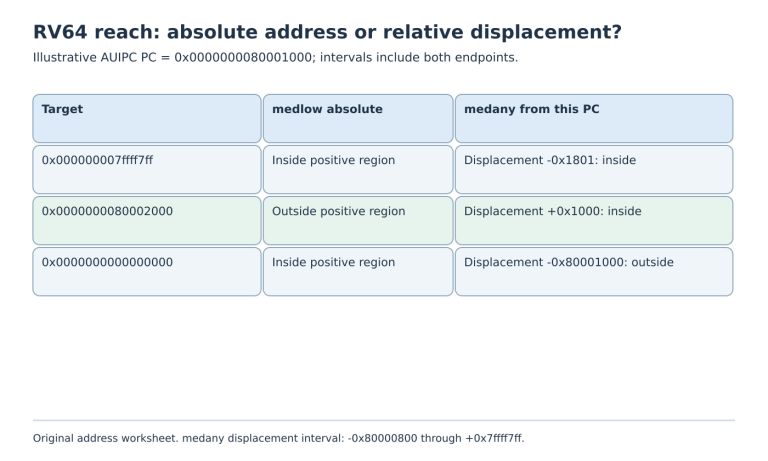
Why does an RV64 image linked near 0x80000000 fail under medlow, and why does medany solve only PC-relative reach rather than all shared-library requirements?
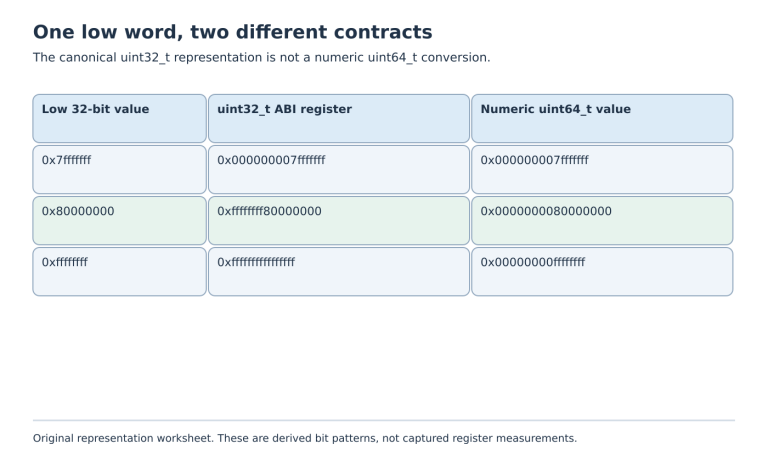
Why can a hand-written RV64 caller break a C uint32_t interface by zero-extending bit 31 even though the source type is unsigned?
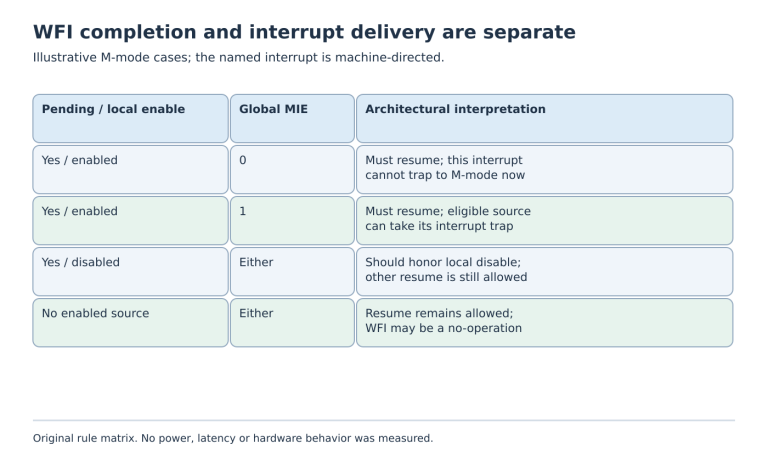
Why can a RISC-V idle loop continue after WFI with no interrupt handler invocation, and why does clearing MIE not guarantee that WFI remains stalled?
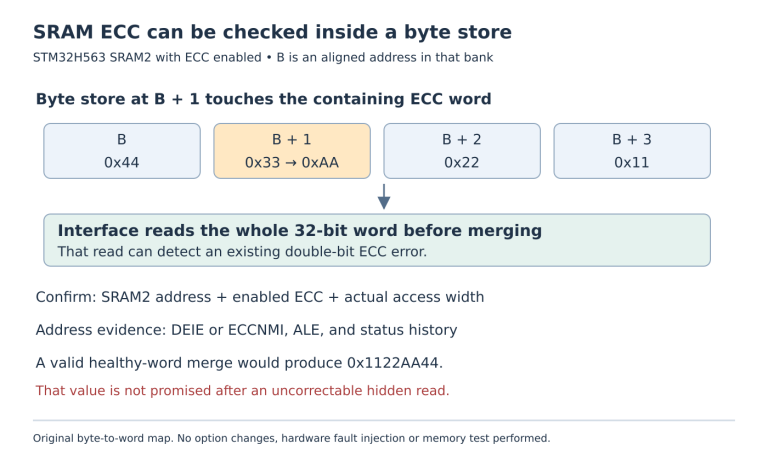
How can a byte or halfword SRAM store detect an ECC double error even when the firmware appears to be only writing memory?
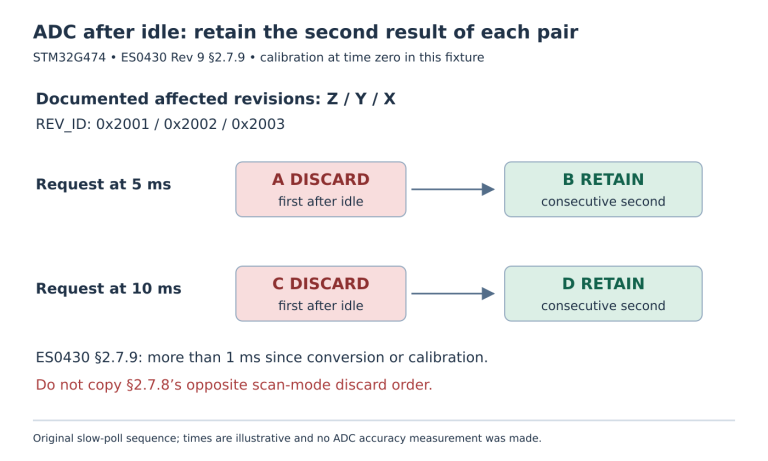
Why can a slowly sampled ADC give a bad first result after more than one millisecond of inactivity, and why must the first rather than second conversion be discarded for this erratum?
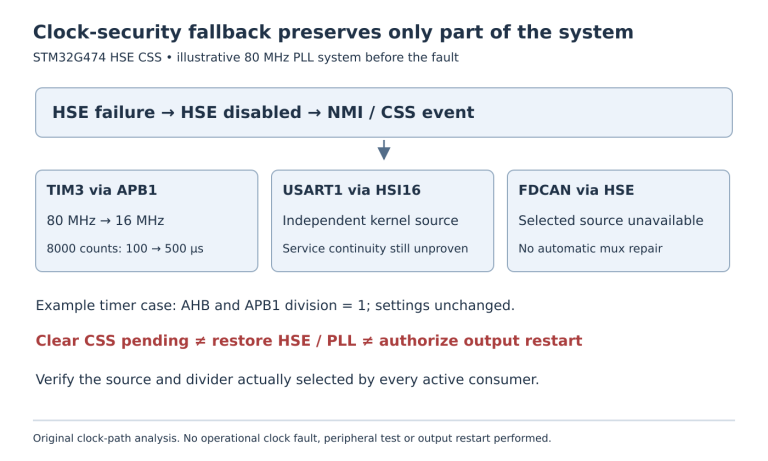
After HSE failure switches the system clock to HSI16, which timing assumptions and output protections still need recovery before normal operation resumes?
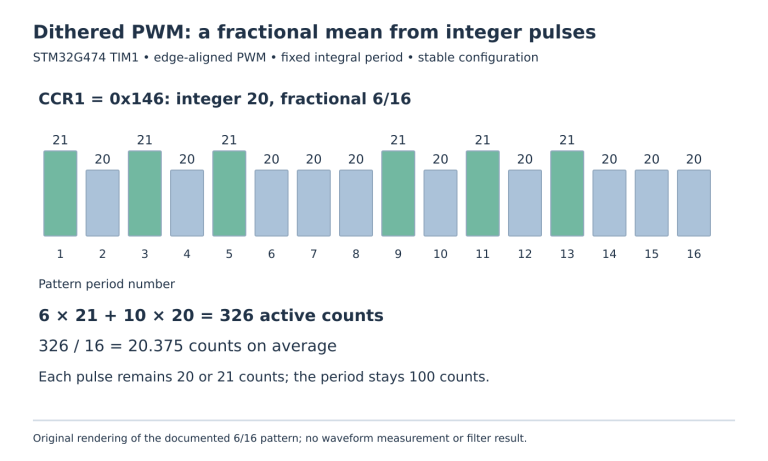
What resolution does TIM1 dithering actually add, and why should a single PWM pulse still move in whole timer-clock steps?
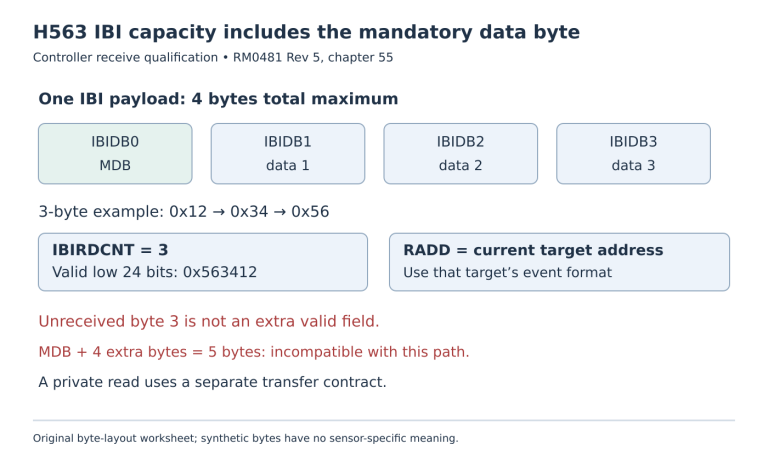
Why can a sensor private read succeed while its I3C in-band interrupt payload is incompatible with the STM32H563 controller?
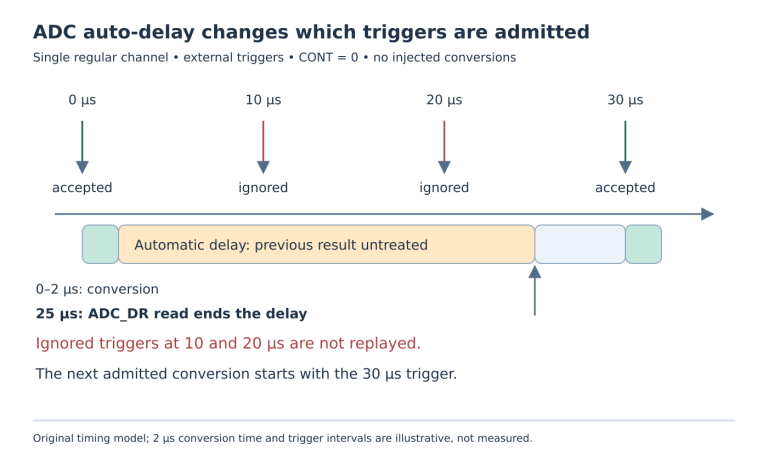
Why does an external ADC trigger stream stop producing one sample per trigger when AUTDLY is enabled and software reads ADC_DR late?