Linux Type-B Multitouch: Track Contact Identity Separately from the Slot Number
Why can a two-finger evdev reader move the wrong contact when it treats ABS_MT_SLOT as a permanent finger identifier or clears unchanged coordinates every frame?
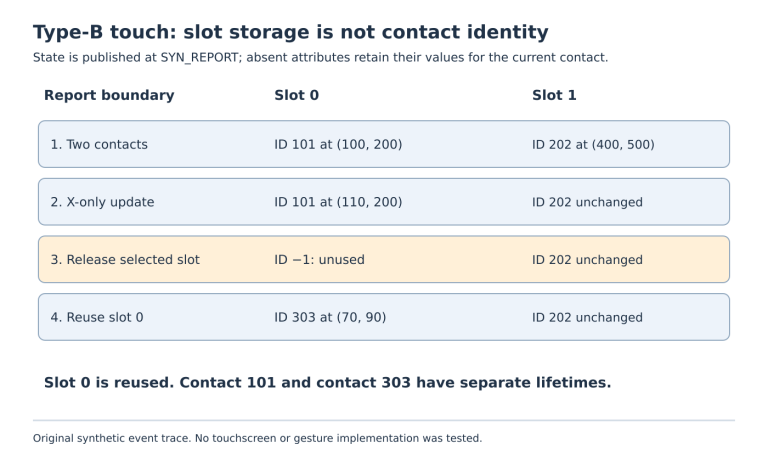
Why can a two-finger evdev reader move the wrong contact when it treats ABS_MT_SLOT as a permanent finger identifier or clears unchanged coordinates every frame?
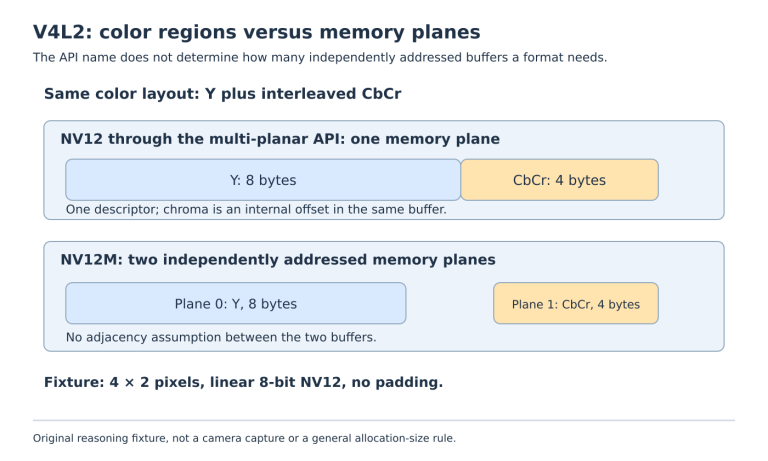
Why does an NV12 frame contain luma and chroma planes while its V4L2 buffer description can still use one contiguous memory allocation?
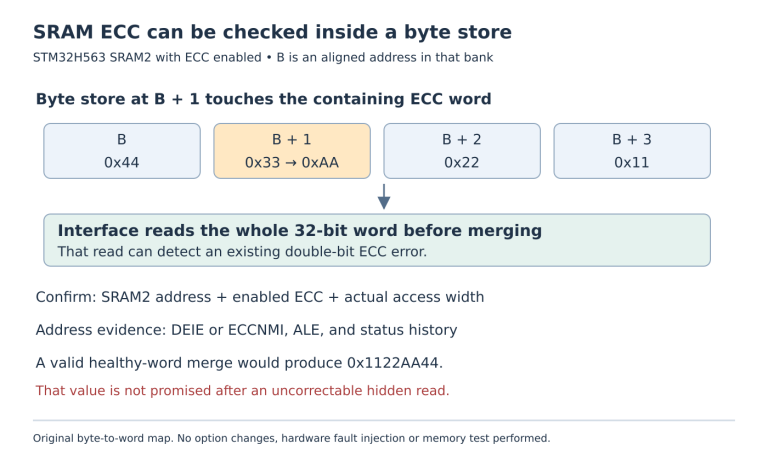
How can a byte or halfword SRAM store detect an ECC double error even when the firmware appears to be only writing memory?
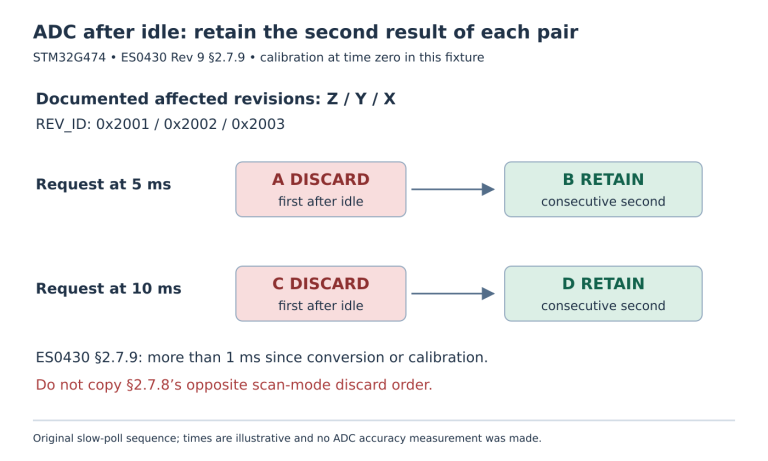
Why can a slowly sampled ADC give a bad first result after more than one millisecond of inactivity, and why must the first rather than second conversion be discarded for this erratum?
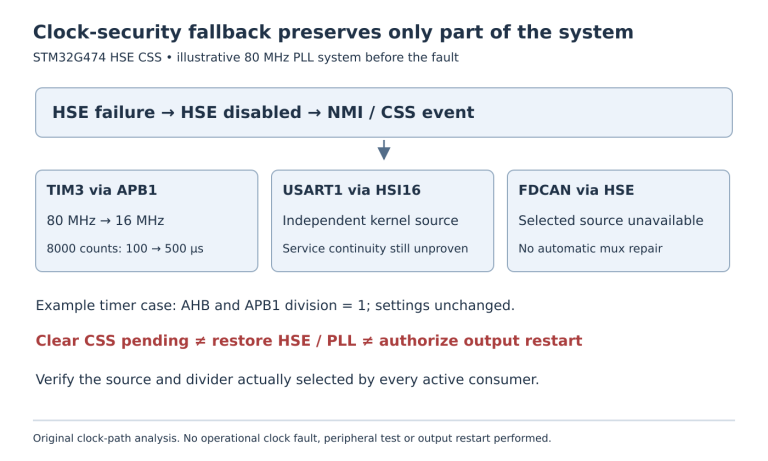
After HSE failure switches the system clock to HSI16, which timing assumptions and output protections still need recovery before normal operation resumes?
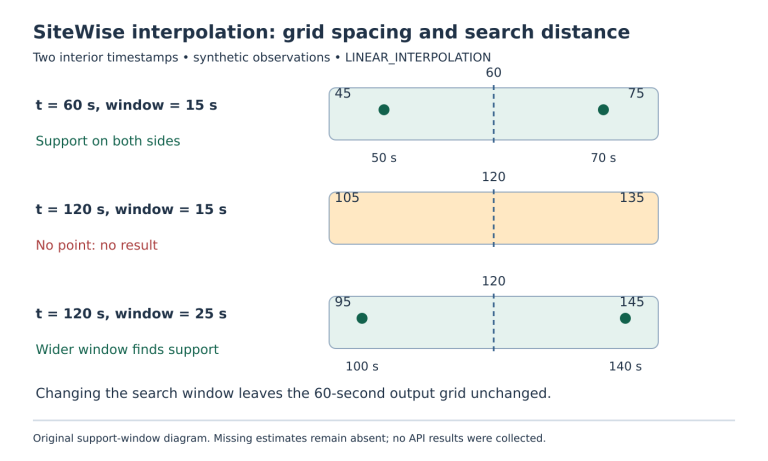
Why does changing intervalWindowInSeconds alter which interpolated values are available without changing the requested output spacing?
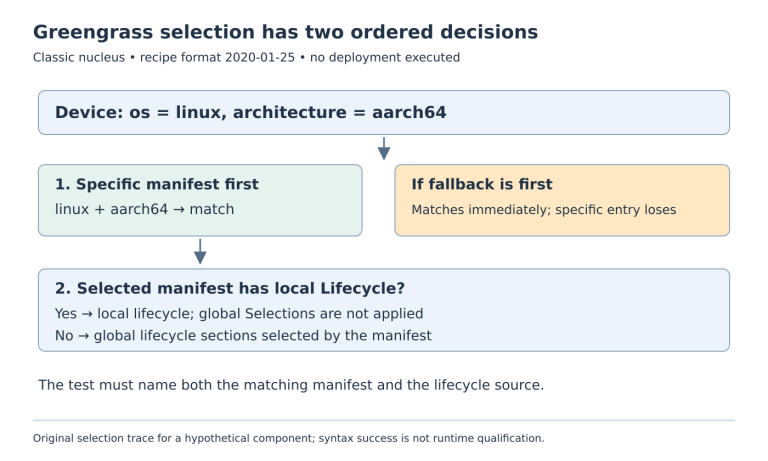
Why can a valid component recipe select a generic artifact or lifecycle on an industrial gateway even when a matching architecture-specific manifest exists?
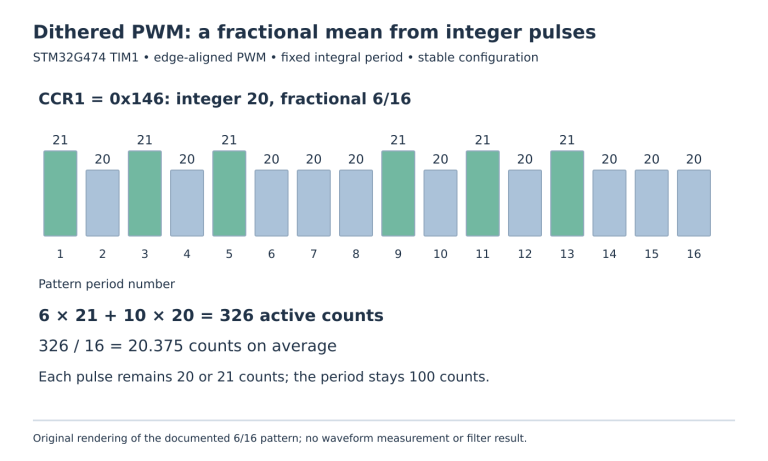
What resolution does TIM1 dithering actually add, and why should a single PWM pulse still move in whole timer-clock steps?
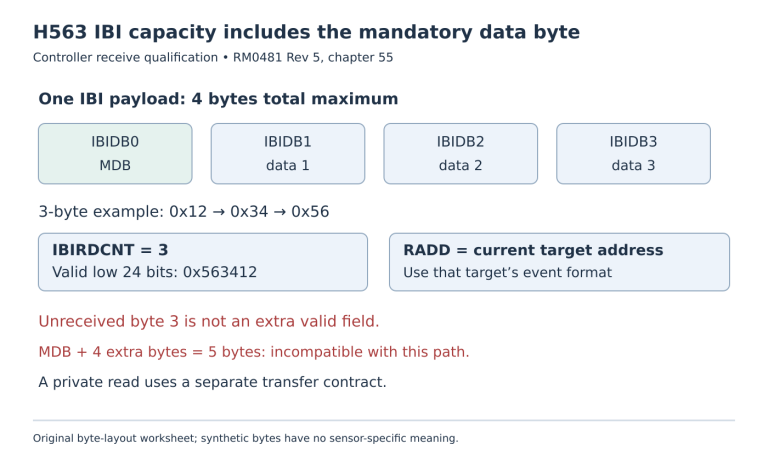
Why can a sensor private read succeed while its I3C in-band interrupt payload is incompatible with the STM32H563 controller?
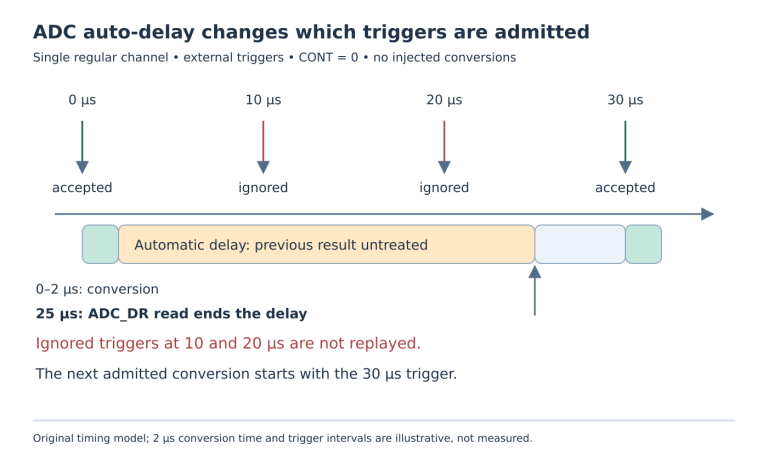
Why does an external ADC trigger stream stop producing one sample per trigger when AUTDLY is enabled and software reads ADC_DR late?