Yocto Virtual Providers: Keep Kernel and Toolchain Selection Explicit
Trace Yocto virtual dependencies to the selected kernel recipe or toolchain integration, then verify that consuming tasks and delivered artifacts use those outputs.
Board-level Linux integration, U-Boot, device trees, kernel drivers and peripheral bring-up. Separate power and hardware checks from software adaptation, and define a recoverable boot path.
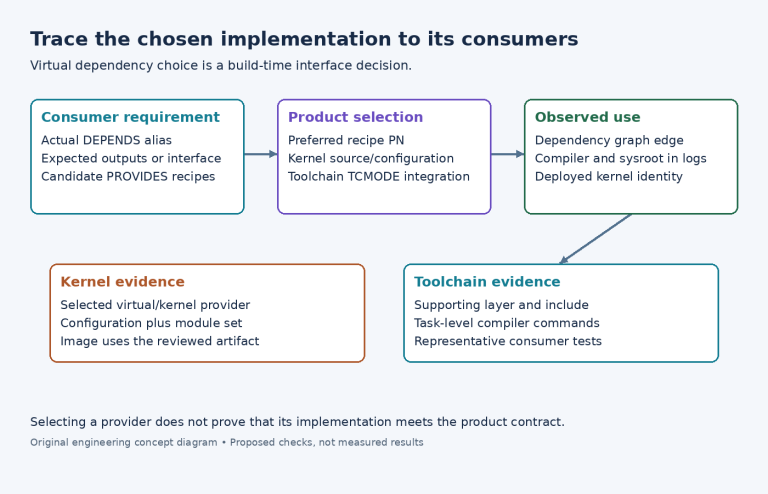
Trace Yocto virtual dependencies to the selected kernel recipe or toolchain integration, then verify that consuming tasks and delivered artifacts use those outputs.
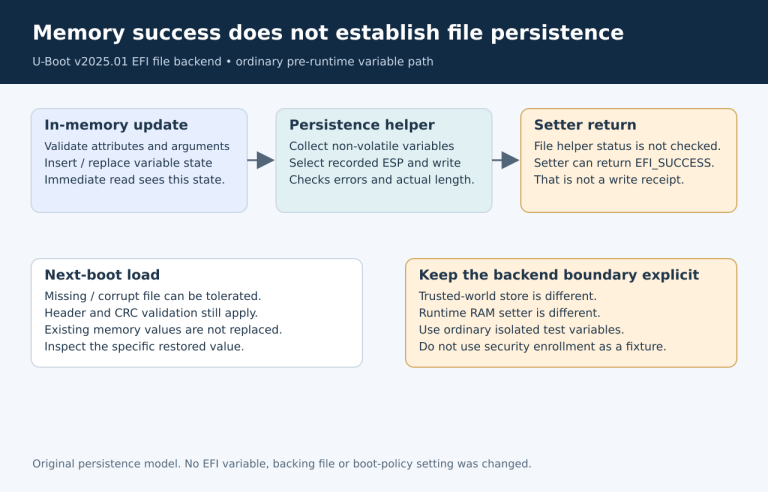
Trace file-backed EFI variables across memory update, ignored persistence status and tolerant next-boot restoration.
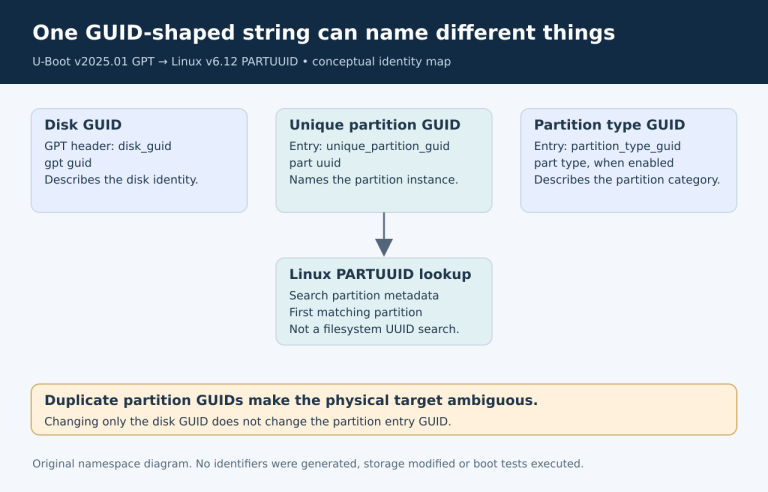
Keep disk GUID, unique partition GUID and type GUID separate when constructing a Linux PARTUUID root reference.
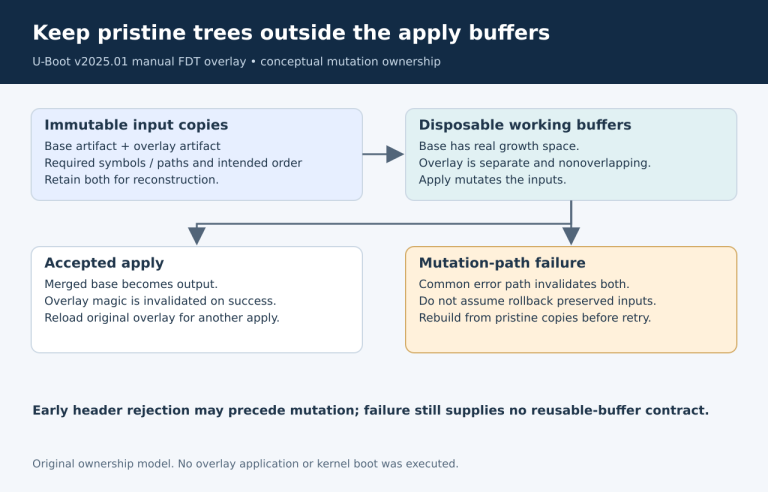
Preserve pristine overlay inputs across mutating apply operations, accounting for symbol fixups, growth and consumed overlay buffers.
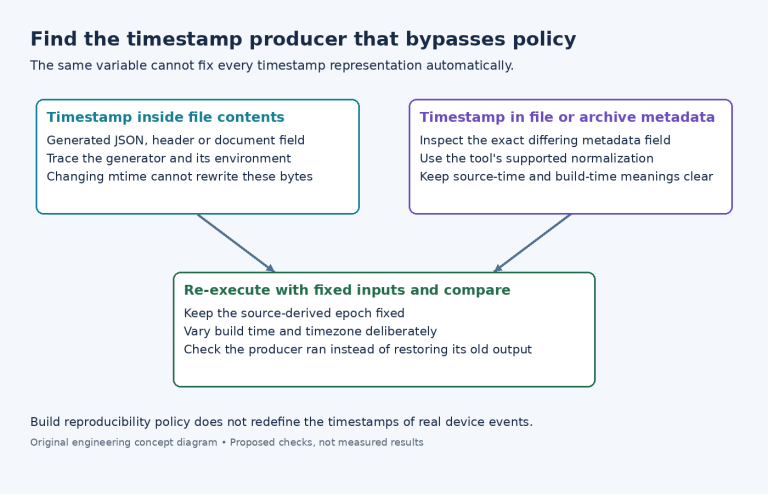
Find timestamp differences that bypass SOURCE_DATE_EPOCH by tracing generated content, task environments, producer formatting and genuinely re-executed comparisons.
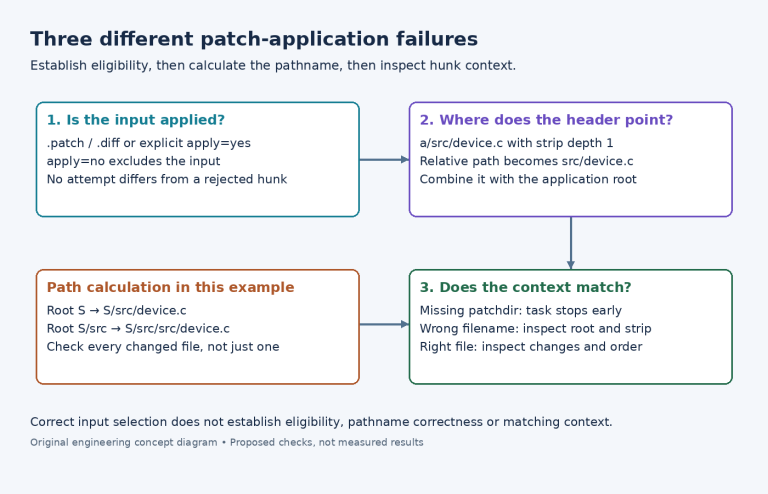
Diagnose Yocto patch failures through application eligibility, strip depth, target directory and source-context boundaries, using a concrete pathname example.
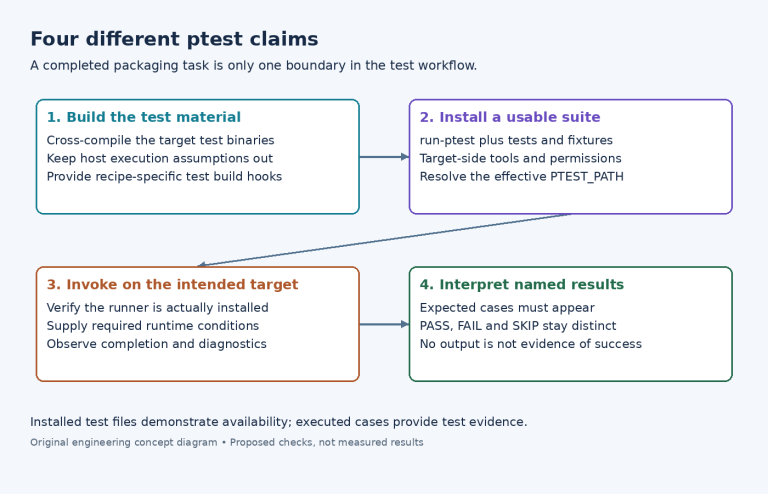
Diagnose Yocto ptest integration across test compilation, installed fixtures and dependencies, target invocation and PASS/FAIL/SKIP interpretation.
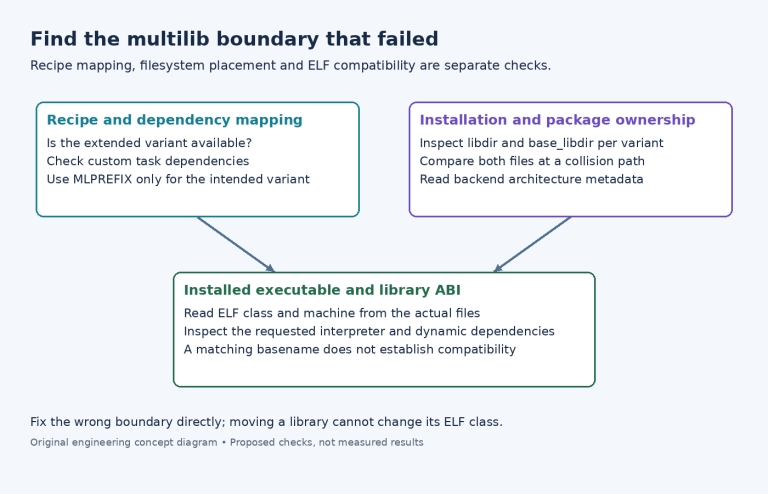
Diagnose Yocto multilib failures by separating extended recipe identity, variant installation paths, backend package collisions and executable ABI requirements.
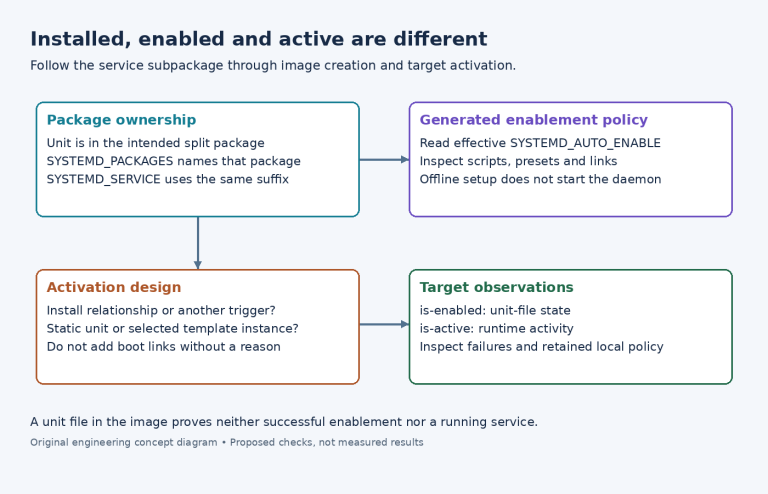
Trace Yocto systemd service subpackage ownership, generated enablement policy, unit installation relationships and separate target enablement/activity state.
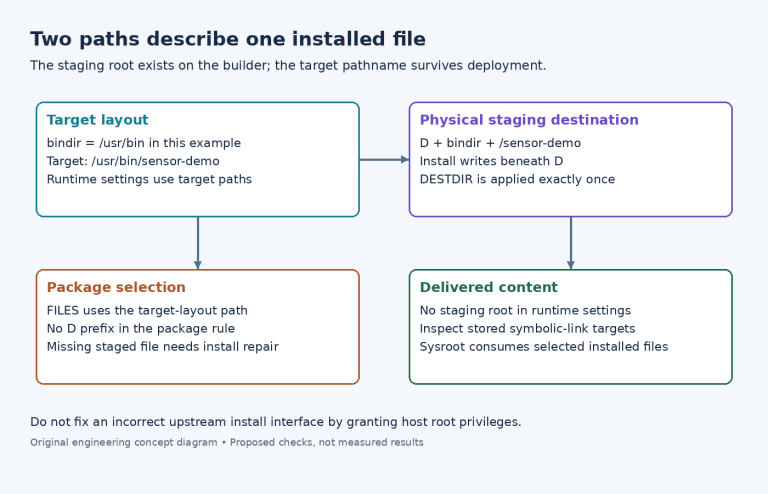
Keep Yocto target prefixes, DESTDIR staging, custom install commands, package FILES paths and sysroot consumption separate when diagnosing misplaced files.