EEZ Studio Data Inputs: Detect a New Trigger Reusing Old Values
Why can a component run on a new sequence trigger with data left over from an earlier execution?
Firmware requirements, peripheral integration, task coordination, fault diagnosis and verification for microcontroller products. Start from the actual hardware and acceptance conditions before choosing an implementation.
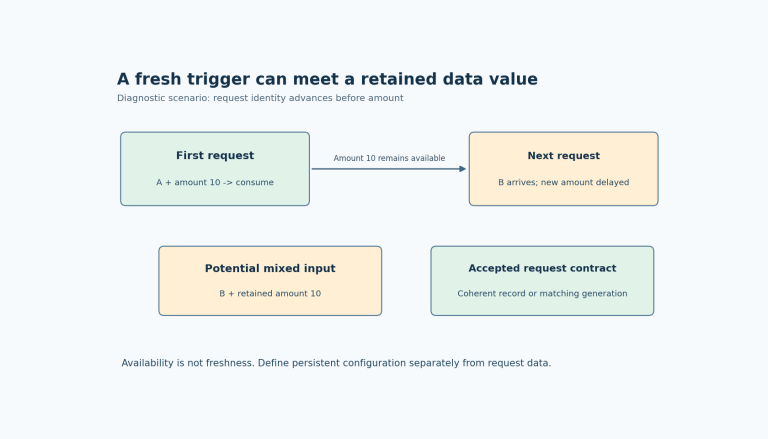
Why can a component run on a new sequence trigger with data left over from an earlier execution?
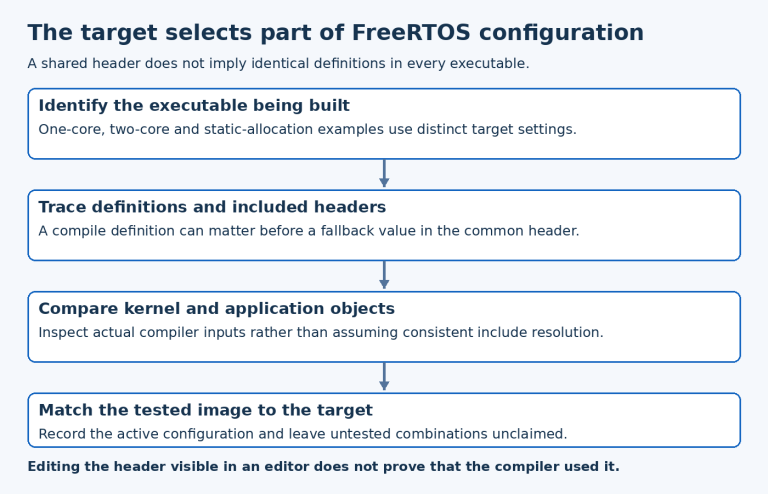
Trace Pico FreeRTOS target definitions, configuration include chains and per-object compiler inputs before changing kernel options.
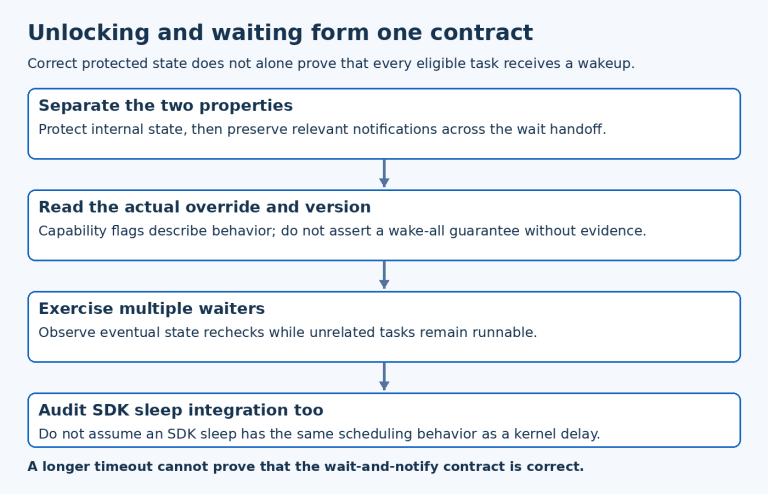
Review Pico SDK FreeRTOS wait-and-notify overrides, capability flags and multi-waiter progress before changing timeouts.
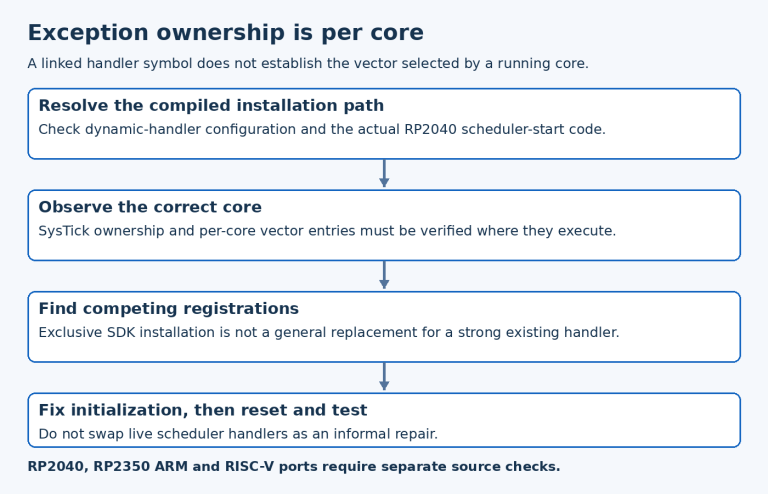
Diagnose RP2040 FreeRTOS exception ownership using dynamic-registration configuration, actual vectors and core identity.
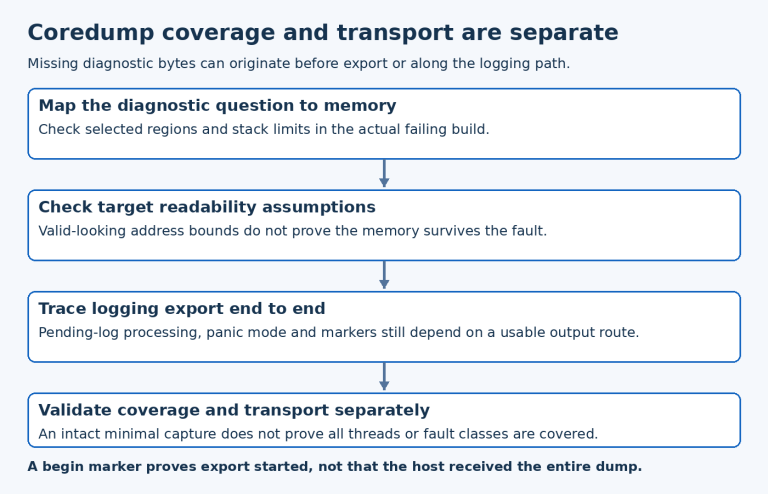
Diagnose Zephyr coredump gaps by separating configured memory selection from logging-backend transport dependencies.
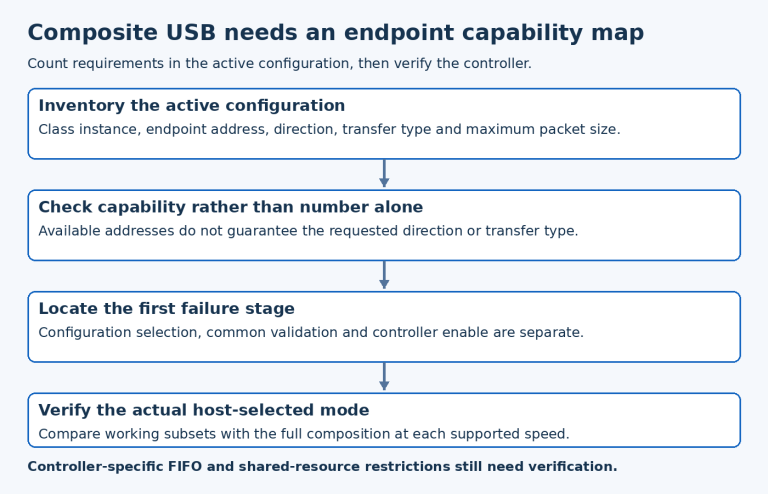
Diagnose Zephyr composite USB activation using per-configuration endpoint capability and controller resource checks.
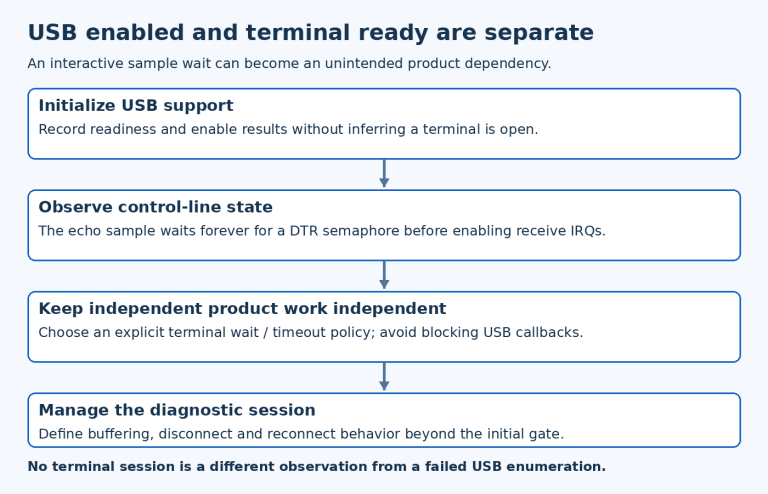
Separate Zephyr CDC ACM DTR waiting from headless product startup and explicit diagnostic session state.
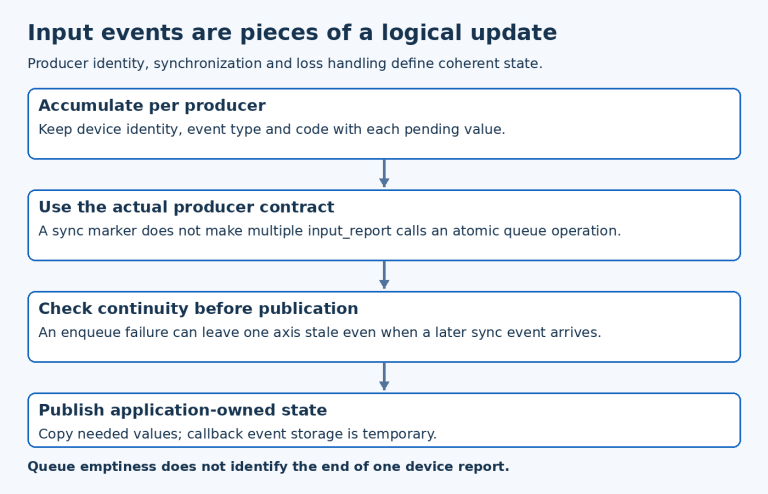
Assemble Zephyr multi-axis input events with explicit producer boundaries and queue-loss recovery.
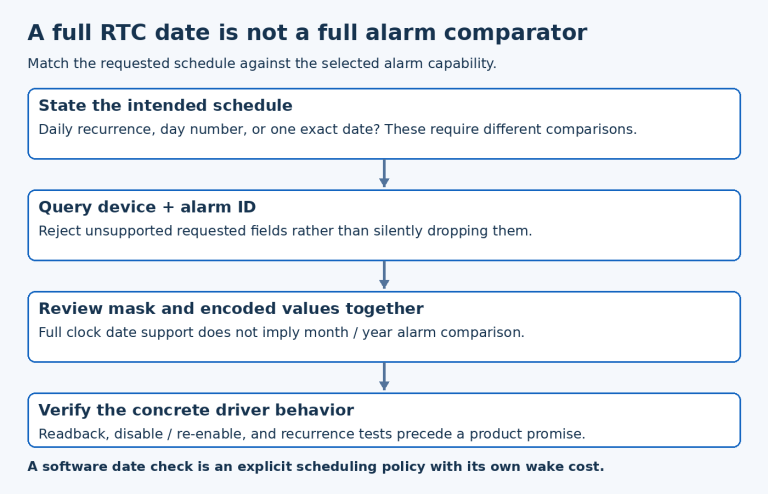
Check Zephyr RTC alarm field masks and calendar representation before implementing exact-date schedules.
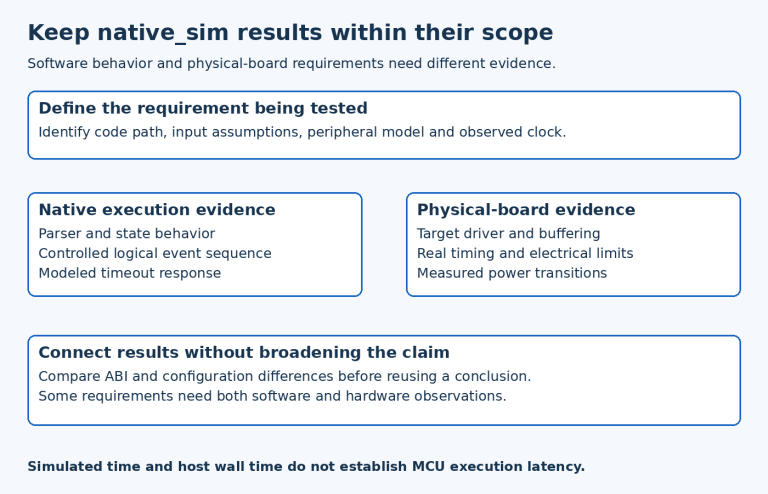
Define what Zephyr native_sim can establish about software while keeping timing and board-specific claims separate.