Zephyr OS Asynchronous SPI: Keep Transfer State Alive Until Completion
Review asynchronous Zephyr SPI request ownership from submission through callback and application consumption.
Firmware requirements, peripheral integration, task coordination, fault diagnosis and verification for microcontroller products. Start from the actual hardware and acceptance conditions before choosing an implementation.
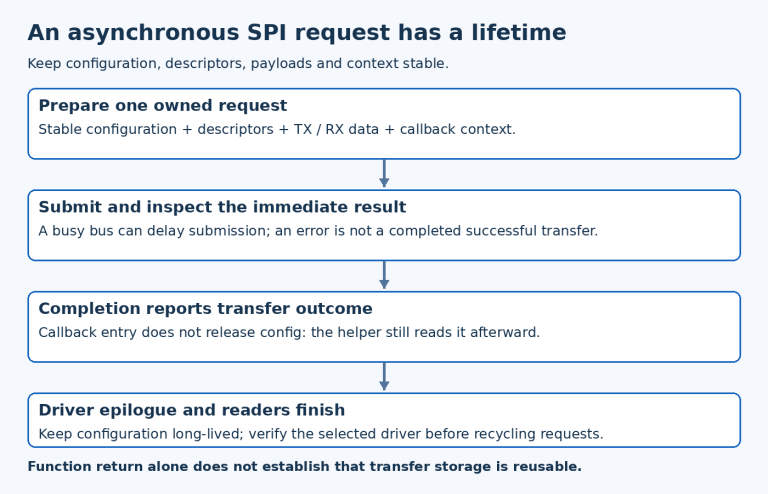
Review asynchronous Zephyr SPI request ownership from submission through callback and application consumption.
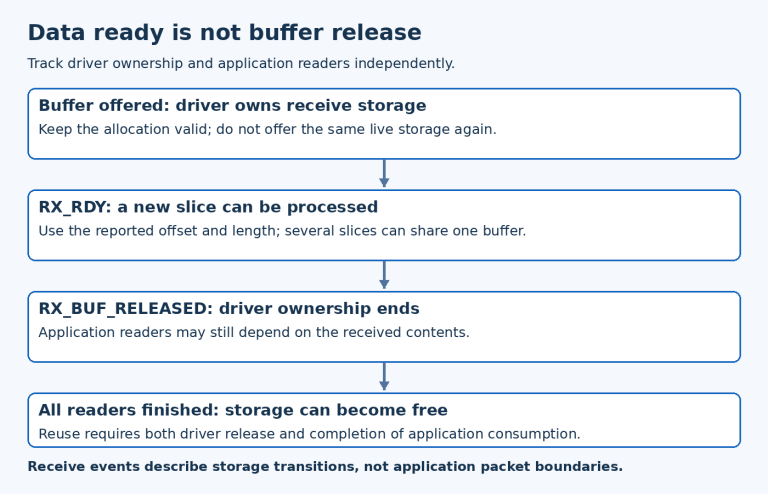
Model Zephyr asynchronous UART RX slices and buffer reuse across ready, release and consumer-completion events.
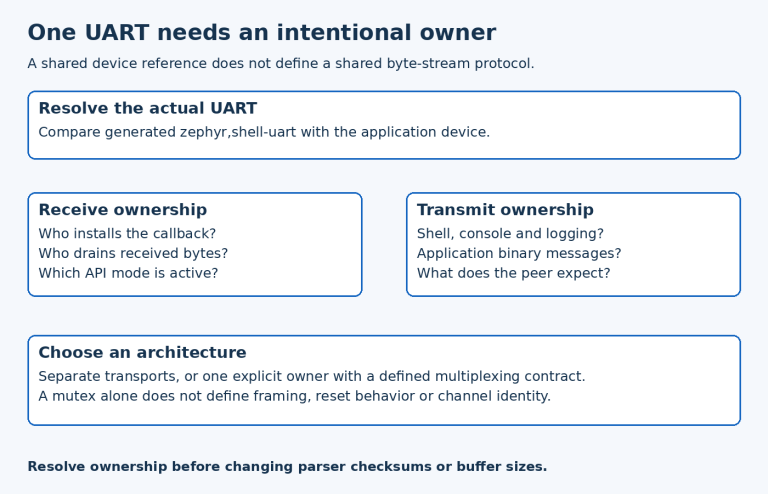
Separate shell transport ownership from binary framing when integrating a Zephyr UART protocol.
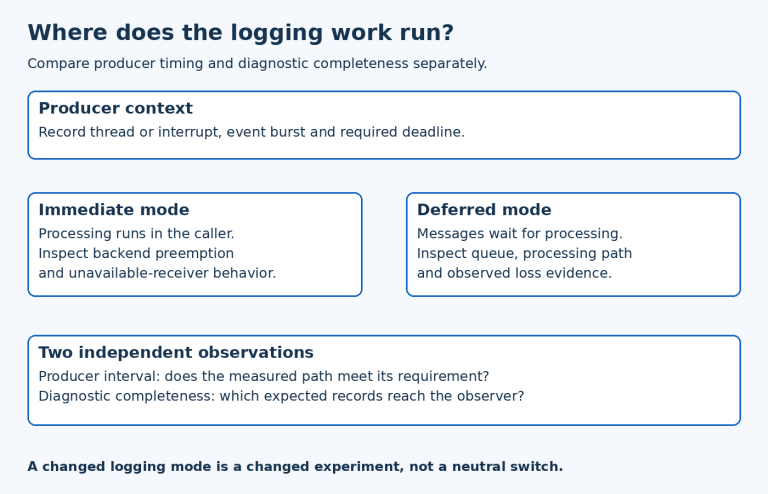
Review Zephyr immediate logging through caller context, backend behavior and burst conditions.
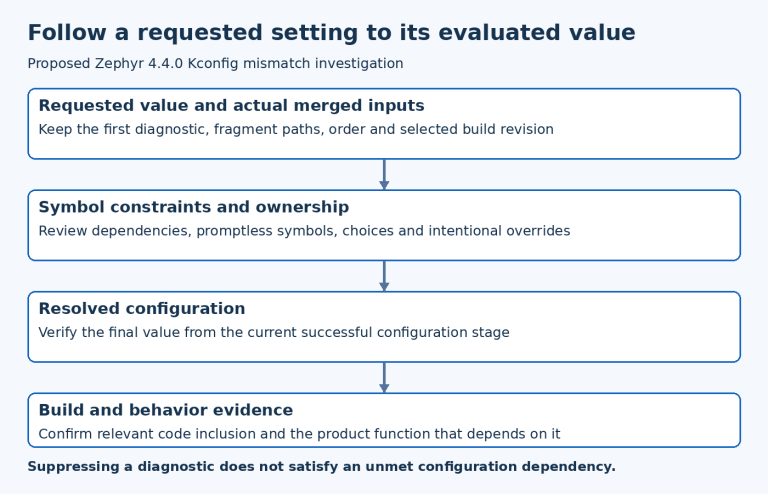
Explain a disabled option through actual fragments, dependencies, derived symbols and choice resolution.
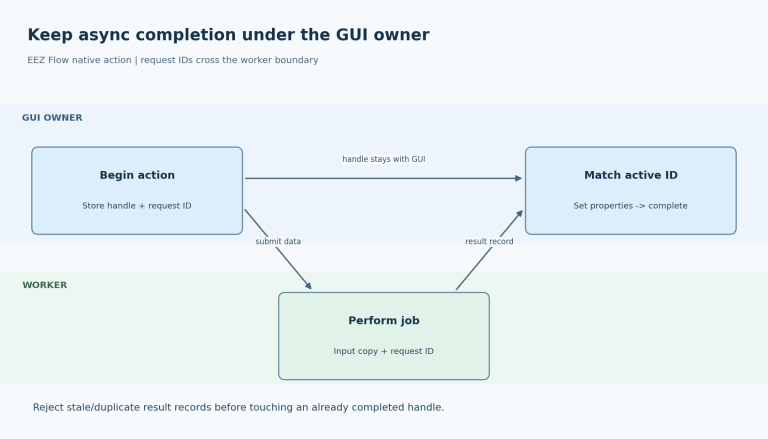
How should a worker finish an EEZ Flow async native action without resuming Flow from an unsafe thread?
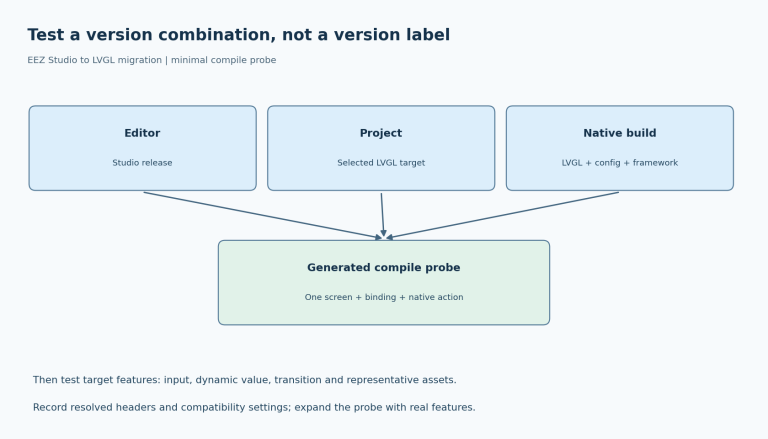
How can a project pass editor preview yet compile generated LVGL calls against the wrong API generation?
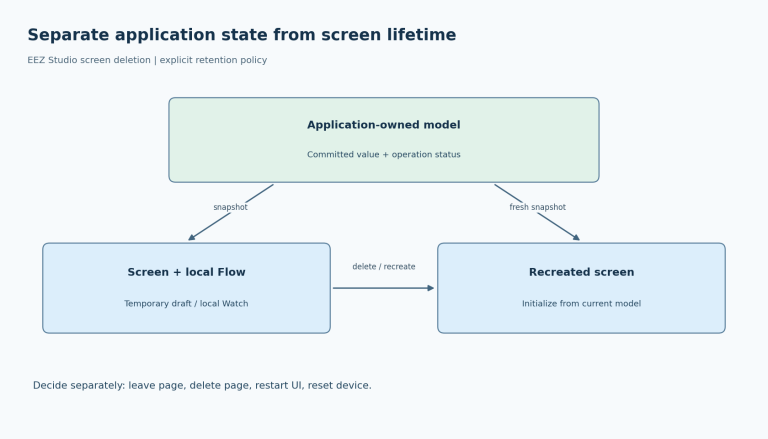
Which state must leave a screen-local Flow before EEZ Studio screen lifetime management deletes that screen?
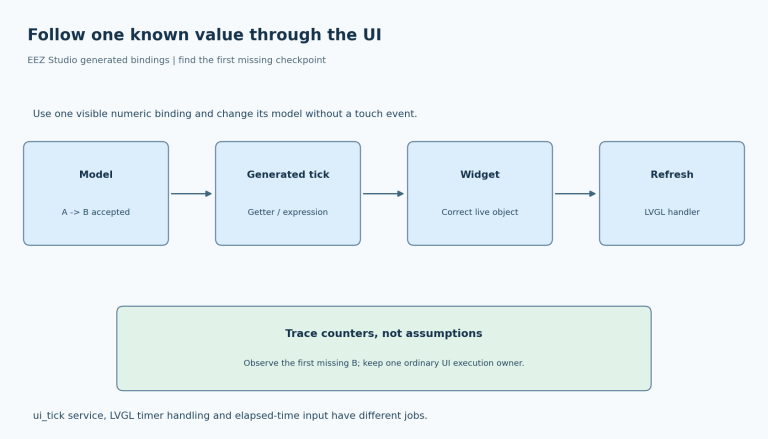
How do you separate a missing EEZ ui_tick call from missing LVGL timer handling when generated dynamic content stops updating?
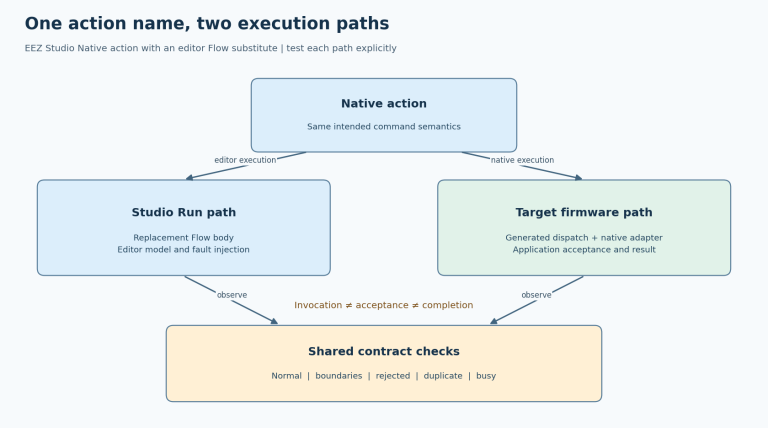
Test the editor substitute Flow and target native implementation independently against the same command acceptance and completion contract.